



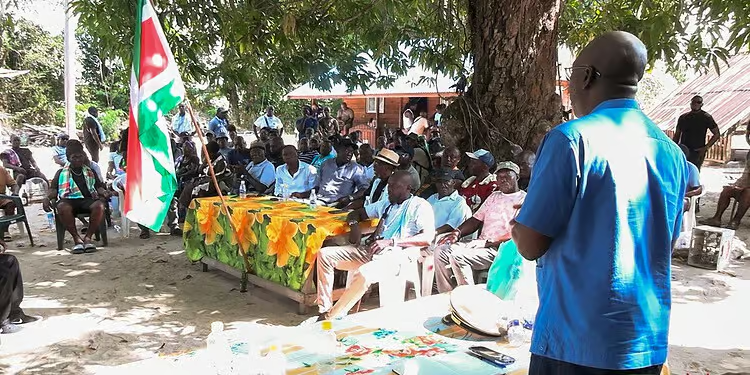


The community of Dritabiki has spoken out against the use of cyanide in gold mining in the area. During a liba krutu (river meeting) on Sunday, November 1, 2026, the recent incident involving the toxic substance Jin Chan in Godo Olo was discussed.
A presidential delegation, led by general adviser Edgar Dikan, attended the meeting to hear the community’s concerns and discuss possible measures.
The delegation visited the area on the instructions of President Jennifer Simons. In addition to Dikan, the mission included representatives of the Nationale Milieu Autoriteit (NMA; National Environment Authority), the Managementteam Ordening Artisinale Goudwinning and district commissioner Josafat Kanapé of Tapanahony.
The reason for the visit was the incident in Godo Olo, in which fish were stunned and fish deaths were observed. According to Dikan, the situation arose after a boat transporting Jin Chan took on water. The boatman subsequently reportedly cleaned his vessel and bailed the contaminated water into the river. This may have caused the toxic substance to enter the river water. The incident caused great concern among residents, who depend on the river for their daily livelihood.
Community rejects cyanide use
During the liba krutu, attended by representatives of the Aukan community, it became clear that residents no longer want to allow gold mining activities involving cyanide. Head Captain John Lesina, representative of the granman of the Aukans, expressed his appreciation for the visit by the presidential delegation. At the same time, he stressed that the community draws a clear line when it comes to the use of toxic chemicals. “If someone wants to mine gold in the traditional way, as we have been accustomed to from time immemorial, that is not a problem. But as far as cyanide is concerned, the people here want nothing more to do with it,” Lesina stated.
He called on the government to take strict action against people who transport cyanide and other dangerous substances to the interior. During the meeting, it was also decided that the Chinese gold miners involved must leave the area as soon as possible.
NMA provides explanation on water safety
During the meeting, the NMA provided information on the risks of cyanide and mercury to people and the environment. Residents’ questions about the safety of drinking water and the consumption of fish from the river were also answered. According to the presented research results, a relatively small amount of cyanide is believed to have entered the river water. Based on these results, it was stated that the water is currently safe for consumption.
No further information was provided on the exact extent of the fish deaths and any long-term consequences for the ecosystem.
Government promises action against toxic substances
Dikan stressed that the government wants to take measures to combat the use of dangerous chemicals in gold mining. “The most important message to society is that the government is doing everything to stop the use of these toxic substances here,” Dikan said.
The community also urged support for the restoration of the affected area. Attention was also requested for better control over the transport, storage and use of cyanide in the interior.
Dikan called on residents to share information with the authorities about locations where cyanide is used or stored. According to the delegation, cooperation with local communities is necessary to prevent new incidents and avert further harm to people and the environment.