The ministerie van Sociale Zaken en Volkshuisvesting (Sozavo) intends to radically change social policy. Instead of providing financial support only, the emphasis should be placed on guiding families towards economic independence.
At the same time, the ministry is working on digitising its services and cleaning up a client database of approximately 200,000 registrants. According to Minister Diana Pokie, these measures should ensure that social benefits are more specifically directed to citizens who genuinely need support.
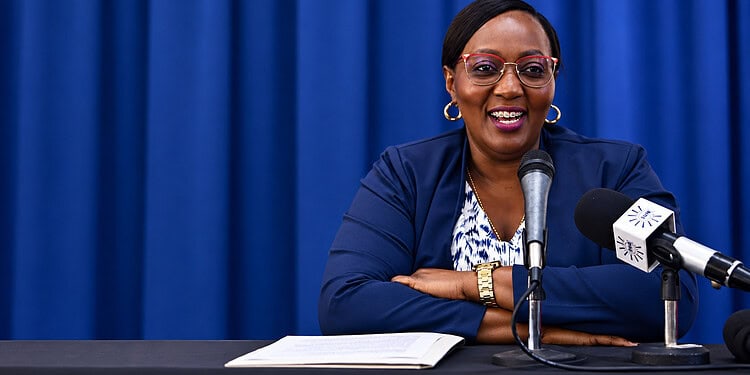
In an interview with the Communicatie Dienst Suriname (CDS, Suriname’s Communications Service) on Thursday, October 15, 2026, Pokie explained her ministry’s policy intentions. According to the minister, the current system, in which citizens mainly receive financial allowances, is insufficient to structurally help families out of poverty.
The ministry therefore wants to switch to an approach in which family guidance, education, employment and social support are linked.
Brazilian model should make families more independent
An important part of the policy change is the planned introduction of a programme modelled on Brazil’s Bolsa Família. This programme will be adapted to Surinamese circumstances and should primarily contribute to strengthening families and the development of children.
Consideration is being given to after-school care, homework guidance and social work. The position of parents will also receive special attention.
According to Pokie, a social benefit, which can amount to as much as SRD 6,000, is in many cases insufficient to cover all living expenses. Sozavo therefore wants to guide parents towards paid work, in cooperation with the ministerie van Volksgezondheid, Welzijn en Arbeid (VWA, Ministry of Health, Welfare and Labour).
In addition to regular jobs, possibilities for working from home and other forms of income generation are also being considered. The ultimate goal is for families to become less dependent on government support.
Approximately 200,000 registrants to be screened
Another important measure concerns the cleanup of Sozavo’s client database. The ministry currently has approximately 200,000 registrants who will be reassessed for their entitlement to social benefits.
According to Pokie, this review must take place on the basis of objective criteria and, where necessary, certified medical statements.
Through the screening, the ministry wants to prevent people from improperly receiving social support. The minister states that this will also create room to better support vulnerable groups, including people with disabilities.
The ministry further expects that a more transparent assessment system will limit opportunities for favouritism and arbitrariness in the allocation of benefits.
Sozavo wants to operate fully digitally in 2027
In addition to the reform of social policy, modernising the administration is also on the agenda. According to the minister, approximately 75 percent of administrative work is still currently carried out manually.
The aim is to fully digitise operations in 2027. This should allow applications to be processed more quickly and improve oversight of payments.
The ministry also wants to end cash payments of social benefits. Benefits must be provided exclusively through banking channels, with the Monikarta playing a central role.
The Surinaamse Postspaarbank (SPSB) is responsible for the management and lawful issuance of this payment card. Particularly in the interior, the transition to digital payments should contribute to safer and more efficient service provision.
Addressing housing shortages with subsidies and social rental housing
In the area of housing, the ministry wants to continue supporting citizens who have difficulty finding or paying for suitable accommodation.
Through the directoraat Volkshuisvesting, citizens can submit applications for construction and renovation subsidies, rent subsidies and emergency assistance after natural disasters, among other things. Applications can be submitted both digitally and in person.
Work is also under way to expand the supply of social rental housing. A total of 93 homes are to be built within the Koela housing project. According to Pokie, the first eleven homes have now been completed and occupied.
The Affordable Housing Project (AHP), financed by the Islamic Development Bank (IsDB), is also receiving attention. According to the minister, the completion rate of this project has increased under the current cabinet from 23 percent to approximately 75 to 80 percent.
Within the programme, 150 newly built homes are being realised in Voorburg and another 150 homes in Reeberg, in cooperation with non-governmental organisations (NGOs).
Minister acknowledges backlogs and limited financial scope
Pokie acknowledges that the ministry faces backlogs and limited budget resources in implementing its plans. Nevertheless, she states that steps have been taken in the past period to improve services.
In the period ahead, the minister also wants to focus on better internal communication and more accessible information provision for citizens.
With the announced reforms, Sozavo ultimately wants to ensure that social support serves not only as a financial safety net, but also as a means of offering families prospects for an independent existence.