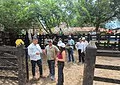



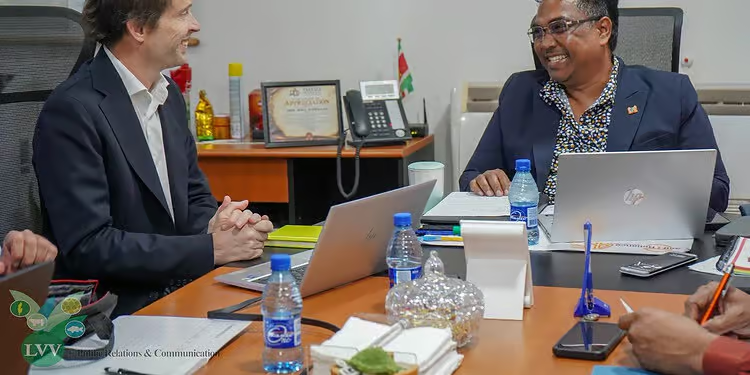


LVV Minister Mike Noersalim received the delegation on Monday, November 2, 2026, in Paramaribo. The team comes from the FAO Investment Centre, which is based at the organisation’s headquarters in Rome. Suriname is the first country where the regional programme is being implemented. Saint Lucia and Dominica are also taking part.
Investments across the entire production chain
The mission focuses on so-called agricultural value chains. This involves looking not only at the production of agricultural crops and fisheries products, but also at processing, storage, distribution and final sales.
For the rice sector, for example, this means that in addition to production capacity, attention is also being paid to the availability of drying and storage facilities. Such facilities are important to limit post-harvest losses and offer producers better opportunities to market their products.
The international team combines the practical experiences of entrepreneurs with data on production, international trade and employment. Food security, climate resilience and economic opportunities for small producers, women and young people are also taken into account when determining investment priorities.
Producers and financial institutions involved
National coordination of the project is in the hands of Prithvi Jairam, FAO project coordinator in Suriname. During this week, he is bringing together representatives of producers, processing companies, financial institutions and the government.
The international mission is led by economist Julien Vallet of the FAO Investment Centre. The team also includes Carlos Puig Esteve, a specialist in agricultural value-chain analyses, and Cesar Falconi, an expert in agricultural investments.
Malcolm Wallace of the Caribbean Development Bank (CDB) is also taking part in the mission. The development bank is one of the partners in the regional programme.
First investment proposals in preparation
On Friday, November 6, the delegation will discuss its initial findings with the various LVV directorates. Based on the research results, it will be determined which agricultural and fisheries chains will be given priority.
Concrete investment proposals will then be developed for the selected sectors. These must include, among other things, a preliminary cost estimate and provide insight into possible sources of financing.
The ultimate aim of the process is to stimulate targeted public and private investments that can contribute to a stronger agricultural and fisheries sector, more employment and greater food security in Suriname.