


Humanity faces a paradox. We have more scientific and technological knowledge to produce food than ever before. At the same time, the need to change our food production has never been clearer.
The Green Revolution was one of the great successes of the twentieth century. Higher agricultural yields made it possible to feed billions of people and avert famines that many considered inevitable. But that success also came at a cost. The intensification of agriculture contributed to soil degradation, greater use of water and inputs, and environmental damage.
The challenge of this century is to produce more with fewer resources: more food on less land and higher yields with more efficient water use. Farmers must benefit, while more carbon is also stored in the soil, biodiversity increases and ecosystems become healthier.
That transition must be central to the next phase of the Food and Agriculture Organization of the United Nations (FAO). Latin America and the Caribbean can contribute greatly to this. The region is a key pillar of global food security and offers ample scope for agricultural innovation.
Argentina, Brazil and other countries have developed production systems that combine science, technology, precision agriculture, no-till farming, genetic improvement and new forms of natural resource management.
Brazil’s Cerrado is a notable example of this. Scientific research and decades of innovation helped an area once considered poorly suited to agriculture grow into one of the world’s major food-producing regions.
The lesson is not that this model can simply be adopted elsewhere. The lesson is that science can help turn natural limitations into opportunities for development.
Africa today needs its own agricultural revolution. There is no universal recipe for this. However, the same starting point applies everywhere: scientific knowledge must guide decisions.
I have devoted a large part of my scientific work to the relationship between the health of the soil and that of plants, animals, people, ecosystems and, ultimately, the planet. Sustainable food security is not possible with depleted soils.
That is why I consider the ‘Living Soils of the Americas’ initiative particularly important. We developed it together with the Inter-American Institute for Cooperation on Agriculture (IICA), during the term of Argentine Manuel Otero.
The initiative brought together scientists, governments, farmers, businesses and civil society organisations around one idea: higher food production and environmental protection do not have to stand in each other’s way. Healthy soils can store carbon, retain water, strengthen biodiversity and make agriculture more resilient, while continuing to support production.
The experience from North and South America was subsequently also shared with Africa. Innovations developed over decades in areas such as Brazil’s Cerrado can offer valuable insights for the African savannas. This is what modern international cooperation should look like: not imposing models, but sharing knowledge and developing solutions together.
The FAO has extensive knowledge, a global presence and the ability to bring parties together. But international organisations fully demonstrate their value only when they turn those capabilities into concrete benefits for their member states and the people for whom they work. In agriculture, this means that solutions must reach producers.
The FAO of the future must be closer to farmers, scientists, businesses, universities and policymakers. The organisation must identify solutions that work, connect them with those who need them, and help adapt and apply them on a larger scale under local conditions. The distance between knowledge and practice must be reduced.
During my many years of cooperation with IICA, I worked closely with Manuel Otero. I saw how he promoted partnerships among scientists, producers, governments and the private sector, and advocated for international cooperation that delivers concrete results. Our joint experience showed that an international organisation can build a bridge between science and public policy, and transfer knowledge from one region to another.
That experience is relevant to the challenges facing the FAO. The organisation must deepen its ties with member states, place farmers at the centre, strengthen cooperation with scientists and the private sector, and share successful methods more effectively.
Otero’s track record offers a concrete perspective on that change. A possible candidacy by him for the position of FAO director-general would, in my view, bring solutions to several of the organisation’s challenges to the table.
Yet the question goes beyond one person. It is about what kind of FAO the world needs.
We need an organisation that can help lead a new agricultural revolution: based on science, aimed at more production with fewer resources, at restoring soils, and at prosperity for farmers and communities.
The knowledge is already there. So are the examples. Now we must turn them into action.
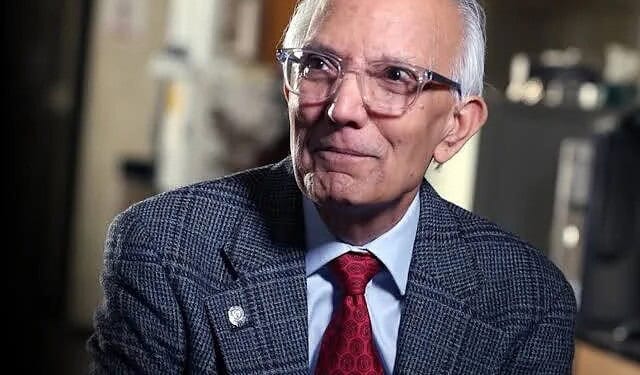
Submitted contribution by Rattan Lal, director of the Lal Center for Carbon Management and Sequestration (C-MASC) at Ohio State University and winner of the World Food Prize.


