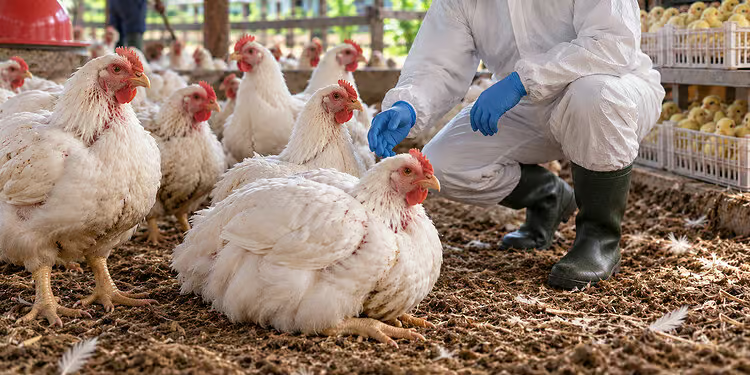
Tests into the sharply increased mortality among broiler chickens in Suriname have found samples positive for influenza A, type H5. This was announced by the Ministry of Landbouw, Veeteelt en Visserij (LVV, Agriculture, Livestock and Fisheries). Further testing must still determine which specific variant is involved and whether it concerns a highly or low pathogenic form of avian influenza.
The investigation was prompted by a notable increase in mortality among broiler chickens over the past week. According to the authorities, exceptionally high losses were observed at a poultry farm in Wanica with approximately 6,000 chickens. More than half of the animals are said to have died by now.
LVV Minister Mike Noersalim said during a press briefing that Suriname had long sought to keep avian influenza outside its borders. According to him, the country was among the few countries in South America where the disease had not been detected for a long time.
The Veterinaire Dienst (Veterinary Service) examined samples together with the Bureau voor Openbare Gezondheidszorg (BOG, Bureau of Public Health). According to Dr Karg, deputy director of the Veterinaire Dienst, it has now been confirmed that several samples tested positive for influenza A, type H5.
It is not yet known whether this concerns a highly pathogenic or low pathogenic variant. Additional laboratory testing abroad is required for this.
Chickens transported from Wanica to Commewijne
The authorities are meanwhile conducting source and contact tracing. A team is on its way to Commewijne after it emerged that chickens from the affected farm in Wanica had been transported to a location in Commewijne.
An investigation is under way into whether the virus may have spread further as a result. The Veterinaire Dienst says it is taking measures to contain infections as quickly as possible and prevent further spread.

Poultry farmers are being urged to immediately report unusual or sudden high mortality among their animals to LVV.
According to the authorities, chicken mortality during this period may also be related to extreme heat, but the scale and speed of the current mortality prompted additional investigation.
Suriname blocked imports from risk areas
Noersalim says Suriname has taken several measures in recent months to prevent the introduction of avian influenza. For instance, imports of hatching eggs from parts of Europe where avian influenza was present were restricted.
Poultry products that had been brought into the country without the required permission were also reportedly seized, with instructions for them to be destroyed.
According to LVV, border controls are being further tightened. Stricter controls have also been introduced in the east of the country.
Besides LVV, the BOG, the Nationaal Coördinatiecentrum voor Rampenbeheersing (NCCR, National Coordination Centre for Disaster Management), the Pan American Health Organization (PAHO) and other local partners are involved in the response.
Avian influenza, also known as bird flu, is a viral disease that mainly affects birds. Some variants cause few symptoms, while highly pathogenic variants can lead to mass mortality among poultry.