




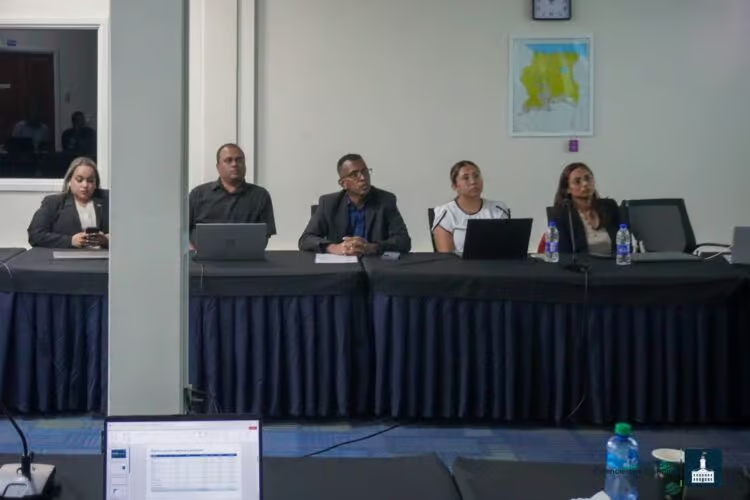





The Ministry of Financiën en Planning wants to speed up the implementation of eighteen ongoing social projects. During a six-monthly evaluation of the Priority Social Projects (SPOB), it was determined that available resources must be converted more quickly into concrete improvements for society. It must also become clearer what results the investments actually deliver.
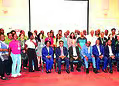
During the evaluation on Tuesday, 10 November, various ministries and government institutions presented the progress of their projects. These included initiatives in healthcare, education, agriculture, housing and digital infrastructure.
Representatives of the Ministries of Volksgezondheid, Onderwijs, Wetenschap en Cultuur, Landbouw, Veeteelt en Visserij (LVV) and Openbare Werken (OWRO) took part in the meeting. The Kabinet van de President, E-Gov, the Academisch Ziekenhuis Paramaribo (AZP) and the Bedrijf Geneesmiddelen Voorziening Suriname (BGVS) were also represented. According to the chair of SPOB, ministries must prioritise their projects better and strengthen their implementation capacity. This should prevent available financing from being used insufficiently or too late.
AZP Emergency Department renovation halfway completed
Within healthcare, 50 percent of the renovation of the AZP Emergency Department has now been completed, according to the presented progress report. Completion is scheduled for March 2027. Steps have also been taken in the areas of digitalisation and medical supplies. For example, a contract has been concluded for an electronic patient record and laboratory results have been digitised. Urgent medical consumables have also been secured for a period of one year.
In the area of medicines, BGVS has concluded thirteen contracts with a combined value of approximately USD 7.7 million. According to the organisation, this covers 43 percent of the Nationale Geneesmiddelenlijst. This percentage is expected to rise to more than 50 percent. The first containers of medicines are expected at the end of November or early December.
Renovation of 61 schools and preparation of additional classrooms
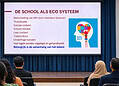
Various projects are also being implemented within education. Contractors have been selected for the renovation of 61 schools and the work is now in the implementation phase. In addition, suppliers have been contracted to deliver teaching materials. The government is also preparing approximately one hundred additional classrooms, which should expand the available education capacity.
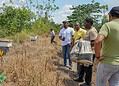
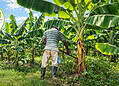
Within the agricultural sector, contracts have been signed for the purchase of urea fertiliser and agricultural machinery. Delivery is expected before the end of 2026, so that the resources are available for the upcoming agricultural season.
USD 20 million available for housing programme
An amount of USD 20 million has been made available for the Serviced Housing Sites Program. The tender procedure for Reeberg 3B is currently underway within this programme. Interested parties can submit their bids until 20 November 2026.
The modernisation of the government’s digital infrastructure is also part of the ongoing projects. According to the progress report, various network components of the data centre have now been completed. A backup system is currently in the testing phase.
Ministries must demonstrate social impact
An important point of attention during the evaluation was the extent to which the implemented projects actually contribute to improving citizens’ living conditions. It was therefore agreed that progress reports will from now on be prepared according to a uniform format. In addition to project status and the degree of implementation, ministries must also provide visual material showing the situation before and after the work.
Furthermore, social results must be made measurable. For investments in healthcare, for example, the number of additional patients who can be treated or admitted can be considered. Within education, the expansion of the number of available places for pupils can serve as an indicator. Through this, the ministry wants to gain insight not only into the spending of resources, but also into the actual effect of the projects on society.
Evaluations possibly every quarter
Various bottlenecks were also discussed during the meeting. These included insufficient oversight capacity, delays in the preparation of project proposals and inadequate coordination between the institutions involved. To identify these problems more quickly, consideration is being given to holding the evaluations every quarter instead of every six months.
In addition, Financiën and the involved procurement departments are working to shorten internal procedures. This should speed up implementation, without compromising transparency and a careful substantiation of tendering and procurement methods.
With the announced measures, the ministry aims to ensure that social investments are not only accounted for administratively, but also lead to visible and measurable improvements for the Surinamese population.