





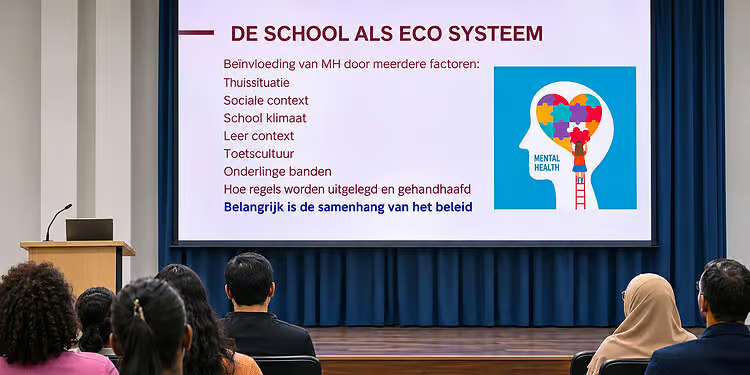


Jadnanansing, who is a psychologist by training, gave an introduction on the theme ‘Mental health in education’. He reflected on the psychological strain that teachers, pupils and students face on a daily basis.
According to the deputy minister, mental health encompasses people’s emotional, cognitive, social and behavioural well-being. This affects the way they think, feel, act and interact with others. Within education, this plays an important role in mutual relationships and in the personal and professional development of teachers.
Increasing workload among teachers
Jadnanansing pointed out that education is constantly changing and that teachers are increasingly confronted with new challenges. The influence of social media, the growing demands of the profession and the need to continuously acquire new knowledge can, according to him, weigh heavily on their mental resilience.
He therefore stressed the importance of personal development, self-reflection and attention to one’s own well-being. Teachers must not only invest in their subject knowledge, but also learn to deal with workload and tensions in the workplace.
According to the deputy minister, an unhealthy working atmosphere may result in teachers not feeling comfortable at their workplace and even considering a transfer. Setting priorities, safeguarding personal boundaries and indicating in time when the workload becomes too high are important skills, according to him.
Pupils also need mental guidance
In addition to the challenges faced by teachers, Jadnanansing addressed the mental development of pupils and students. According to him, children must learn to deal with the transition from the home situation to the school environment, where different rules, expectations and forms of interaction apply.
This transition requires understanding, guidance and the development of mental resilience. A supportive school climate can help pupils adapt better and develop both socially and intellectually.
Breaking the taboo surrounding psychological problems
The deputy minister further stressed that awareness and prevention are closely linked. By making psychological problems open for discussion and recognising signs of overload in time, it can be prevented that tensions seriously affect daily functioning.
According to Jadnanansing, a large proportion of people with depressive feelings do not seek professional help. He cited a ratio of approximately 90 per cent who do not seek help, compared with 10 per cent who do. These figures were cited during his introduction and were not further substantiated in the information provided.
According to the deputy minister, this underlines the importance of reducing the stigma surrounding psychological problems. People should be encouraged to seek professional support in time when they experience psychological complaints.
Jadnanansing concluded his introduction with the message that mental health is not incidental, but a necessary condition for functioning well, both within education and in society.
For people who need psychological support, he referred to the telephone crisis helpline 114 and the online support programme eHealth Suriname.