Minister Mike Noersalim of Landbouw, Veeteelt en Visserij (LVV, Agriculture, Livestock and Fisheries) has urged farmers to comply with the rules on pesticide use. During the annual commemoration of Farmers’ Day on Thursday, 8 October, he stressed that farmers bear an important responsibility for food safety and consumers’ health.
According to Noersalim, farmers are indispensable to the development of the agricultural sector, which he described as an important pillar of Surinamese society. He warned that action will be taken against those who violate the rules.
The minister also called on LVV staff to take their responsibilities seriously. According to him, the ministry must ensure that farmers carry out their work responsibly. At the same time, he expressed appreciation for employees who perform their work well. LVV is working on adjustments to its organisational structure and better recognition of employees. “But it is a process,” Noersalim stressed.
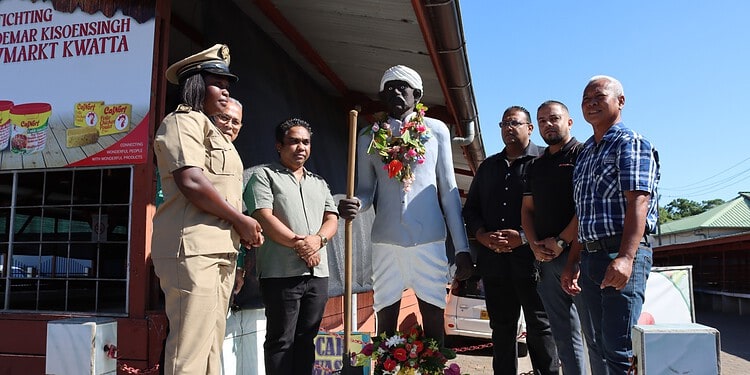
As part of the commemoration, the minister laid a wreath at the Jai Kisaan farmers’ monument at Kwattamarkt. Representatives of Stichting Kibri Mi, Huize Tyltyl and Huize Ashiana received vegetables and fruit.
Various speakers reflected on the contribution of farmers and livestock breeders to food supply and food safety. They included district commissioner Glenda Kranenburg of Wanica-Noordwest, LVV director Rayen Toekoen of Landbouwkundig Onderzoek, Afzet en Verwerking, deputy director Soeparman Sawirjo of Landbouw Midden, and regional leader Armand Matdoerijat.
Sawirjo stressed that farmers feed society through their efforts and contribute to the economy through their entrepreneurship. “Your knowledge and experience form an important part of Suriname’s agricultural heritage. That is why you deserve our appreciation not only today, but every day of the year.”
He called for stronger cooperation between LVV and the agricultural sector. This should contribute to more productive and sustainable agriculture, in which farmers receive a fair price, young people are given opportunities, and Suriname becomes less dependent on food imports.