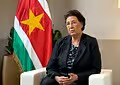





“We are not a rich country; we are a poor country facing a great many challenges,” Pawiroredjo said on Monday on the programme To The Point.
According to the parliamentarian, the population faces daily problems in terms of purchasing power, healthcare, education, infrastructure and public transport. “People do not want to survive, but simply to live well.”
Pawiroredjo stressed that the current problems did not arise overnight. “There is a great deal of backlog in many areas, and this is not new. The country has gradually declined over the years.”
Positive developments, but purchasing power still lags behind
Despite the challenges, the NPS parliamentary group leader is optimistic about Suriname’s future. He pointed out that the government has succeeded in reducing inflation and increasing international reserves at the Centrale Bank van Suriname (Central Bank of Suriname). According to him, these are positive developments indicating that the country is moving in the right direction.
At the same time, he acknowledged that the population is still benefiting insufficiently from these economic improvements. In particular, the purchasing power of vulnerable groups urgently deserves attention, he said.
Pawiroredjo therefore advocates targeted measures to improve the income position of people on low incomes.
“People at the bottom, wage earners in the lowest pay scale, pensioners, AOV recipients must receive more than high earners.”
Rising fuel prices put government under pressure
According to Pawiroredjo, the government is constrained in taking measures to strengthen purchasing power by the economic consequences of the war in Iran. He stated that rising fuel prices are forcing the government to allocate additional resources for fuel subsidies.
According to him, this comes at the expense of financial room that could otherwise have been used for other social provisions. “This money could have been used differently. It is unfortunate.”
Nevertheless, Pawiroredjo believes that the government is making efforts to protect society from the economic shocks caused by the conflict.
Fuel subsidy necessary, according to Pawiroredjo
The parliamentarian warned that the elimination of fuel subsidies could have serious consequences for the economy and households’ purchasing power.
According to him, a further rise in fuel prices would particularly affect people with the lowest incomes. He therefore considers government intervention necessary to prevent the economic situation from deteriorating further.
“Those who are struggling the most will take the hardest hit. So we are handling this situation very carefully,” Pawiroredjo said.