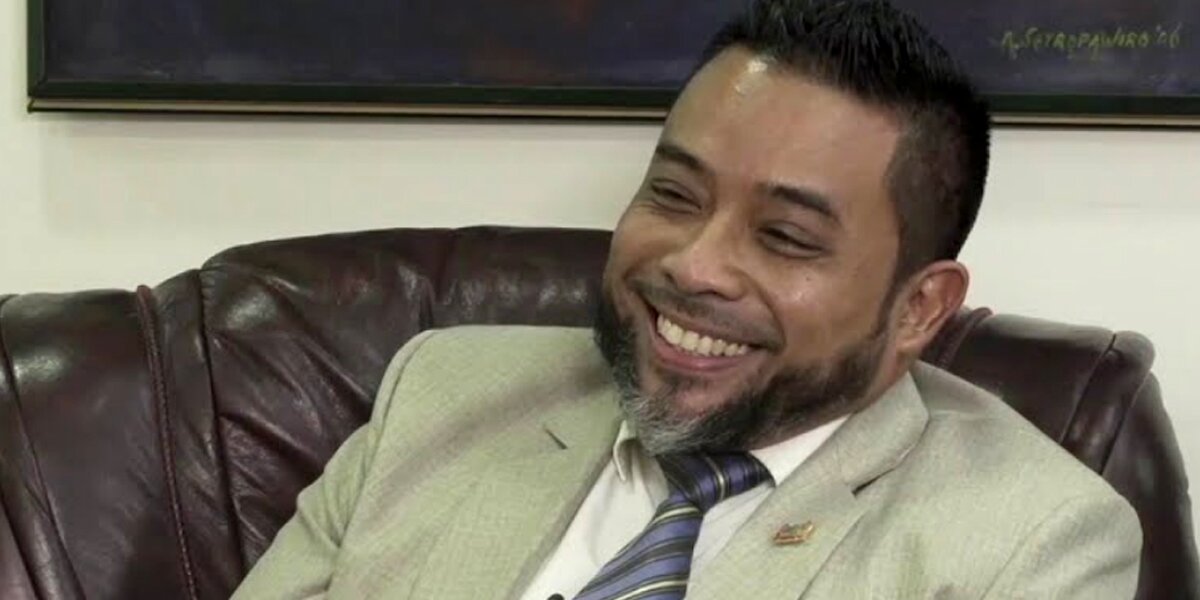
Vice President Gregory Rusland wants to meet again with EnergieBedrijven Suriname to discuss the energy crisis, capacity and necessary investments. The problems are not new, as EBS had previously warned of shortages and the hundreds of millions needed for structural expansion.
Vice President Gregory Rusland considers the energy crisis and the position of N.V. EnergieBedrijven Suriname to be important points of attention for the government. According to him, discussions must be held again with EBS on available capacity, the growth in electricity demand and the investments needed to prevent new shortages.
Rusland said on Wednesday, ahead of the Council of Ministers meeting, that the problems within the energy sector did not arise suddenly. According to him, energy supply must be planned years ahead, because new generation capacity and expansion of the electricity grid cannot be realised within a few months.
The vice president referred to his time as Minister of Natural Resources. In 2008, he said, an energy summit was held at which a programme covering more than fifteen years was mapped out. This took into account annual growth in electricity demand from households, companies and other users.
Energy crisis had previously been raised by EBS
EBS had previously drawn attention to the fact that pressure on the energy system is structurally increasing. Key News reported on 24 January 2025 that then EBS director Leo Brunswijk warned during a press conference that approximately 30 megawatts of additional capacity would be needed in the short term to address problems with the electricity supply.
Brunswijk stated at the time that between USD 25 million and USD 45 million could be needed to bridge the energy crisis for six months. One option was to hire temporary generator capacity. According to him, a USD 3 million advance payment was needed just to reserve generators, while the six-month rental would amount to more than USD 8 million. The final operational costs depended on fuel consumption.
EBS also spoke of a structural investment of USD 157 million
EBS management was not only looking at temporary emergency measures at the time. Brunswijk stated that approximately USD 157 million would be needed for a structural expansion of the energy system. This included a new power plant in Uitkijk that was expected to provide approximately 110 megawatts of additional capacity. An investment of approximately USD 110 million was mentioned for that project alone.
In addition, expansions in Nickerie and Marowijne were discussed. This meant that more than a year and a half ago, EBS had already indicated that both temporary and structural measures were needed to meet growing electricity demand. Brunswijk also stated at the time that energy demand would continue to increase due to economic development, new businesses and activities in the oil and gas sector.
“EBS had previously warned that substantial investments were needed to prevent future electricity shortages.”
Rusland wants to know how far EBS plans have progressed
Rusland acknowledges that EBS had previously called attention to the increasing strain on the electricity system. He therefore wants to review again with the energy company which plans have been drawn up, how far implementation has progressed and what support from the government is needed.
Asked whether EBS had previously given a presentation to the current Council of Ministers on expected developments and necessary investments, Rusland replied that this had not happened. However, this does not mean that the issue had never previously been raised by the company. Statements by EBS from January 2025 show that the energy company has been warning for some time about a lack of capacity and the need for substantial investments.
Current situation confirms pressure on energy supply
The discussion has gained renewed urgency after EBS announced on 25 August 2026 that electricity consumption had risen more sharply than forecast in recent weeks. According to the company, it had already been difficult to meet demand with the available generation units. Due to the further increase in consumption, EBS can no longer meet total demand at all times.
The energy company reports that no reserve capacity is currently available. When a generation unit unexpectedly fails or a technical malfunction occurs, the shortage therefore becomes greater. EBS has indicated that areas in the EPAR region, including Paramaribo, Para, Wanica, Commewijne and Saramacca, may be switched off in rotation for at least three hours. More information is available on the official EBS website.
Rusland stresses importance of long-term planning
According to Rusland, energy policy should therefore not consist solely of responding to acute shortages. When forecasts show that electricity demand will increase within a few years, investments must, in his view, be prepared and implemented much earlier. New power plants, expansion of the grid and sufficient reserve capacity require long-term preparation, he said.
The vice president says the energy issue has now become an important subject within the government. He has also discussed the matter with President Jennifer Simons. Rusland wants to determine with EBS where the company currently stands and which measures the government should support.
Question over implementation of earlier plans
The earlier warnings by EBS also raise the question of what has happened to the announced plans in the intervening period. In January 2025, tens of millions of dollars were already being discussed for temporary capacity and USD 157 million for structural investments. The current situation, in which EBS says no reserve capacity is available, makes the progress of these projects relevant once again.
For Rusland, the emphasis is now on reassessing the situation and determining the next steps. He wants to prevent Suriname from repeatedly being confronted with electricity demand that grows faster than available capacity. Consultations between the government and EBS will therefore have to clarify which earlier plans have been implemented, which projects are still awaiting financing and which investments will now be given priority.