As part of this development, a three-day working mission is taking place within the international Pan-American Highway for Digital Health (PH4H) programme. Suriname is the first Caribbean country to hold a national Pre-Connectathon. During these preparations, it is being examined how different digital healthcare systems can communicate with each other safely and efficiently.
End to fragmented patient records
Minister André Misiekaba of Health, Welfare and Labour stresses that digitalisation is necessary to improve the quality and continuity of healthcare. Medical data are currently recorded and stored in different ways, meaning information is not always immediately available when a patient ends up at another healthcare institution.
With the principle of ‘one patient, one record’, the government aims to address this fragmentation. The goal is for authorised healthcare providers to be able to access relevant medical information, without patients having to repeatedly provide their medical history.
According to Misiekaba, the digital transformation must be accompanied by clear legal safeguards for privacy and data protection. The different information systems must also meet international standards, so that medical data can be exchanged in a uniform and reliable manner.
Digital patient records already tested at RGD and Medische Zending
According to IDB team leader Dominique Afoon, the digitalisation of healthcare is no longer exclusively in the preparatory phase. Suriname has already taken several important steps in recent years.
Work has been carried out on the development of a central Health Information Exchange platform, which is intended to enable the exchange of medical data between healthcare institutions.
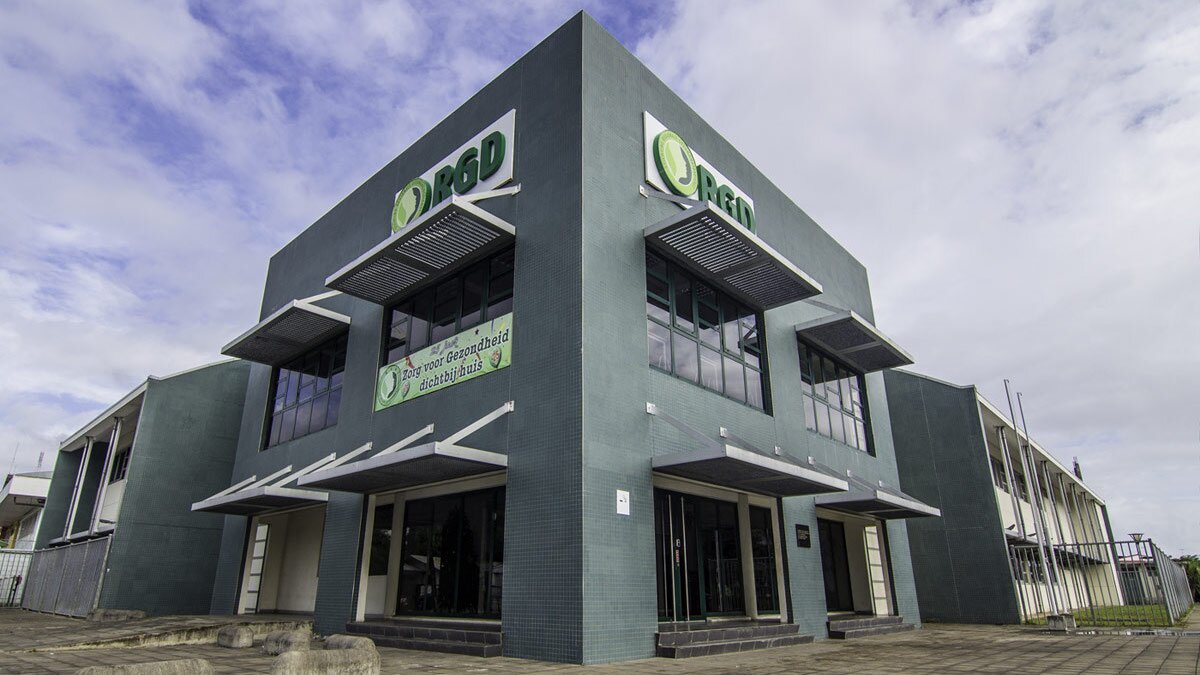
In addition, pilot projects involving electronic patient records (EPR) have been carried out at the Regionale Gezondheidsdienst (RGD) and Medische Zending. The digital death certificate has also been introduced.
According to Afoon, these developments form the basis for further modernisation of healthcare. By recording medical information digitally and making it available, healthcare providers can gain faster access to relevant patient data.
Healthcare systems tested for secure data exchange
The three-day working mission began with a visit to an RGD clinic, where representatives of the organisations involved were able to see how the electronic patient record functions in practice.
Policymakers, health experts and IT specialists then met to discuss preparations for a national Connectathon.
During a Connectathon, different digital systems are tested to determine whether they can exchange medical data according to international standards. This involves looking not only at technical operation, but also at the security and reliability of data transmission.
An action and training plan is also being drawn up for Surinamese professionals. This should enable them to develop the knowledge and skills needed to manage and further expand the new digital infrastructure.
Suriname focuses on regional cooperation in 2028
With these preparations, the government aims to ensure that Suriname can participate in the Caribbean Sub-Regional Connectathon in 2028, which is part of the ONE Caribbean Connect initiative.
That initiative focuses on improving digital cooperation between healthcare systems in the region. In time, this should also make cross-border exchange of medical information possible, in compliance with applicable privacy and security rules.
Although the first steps have been taken, the technical links, legal protection and further implementation of digital patient records still need to be developed.
Through the cooperation between the ministry, the IDB and PAHO, Suriname aims to lay the foundation for a healthcare system in which medical information is available more quickly and patients are less dependent on separate paper records.