Collective labour agreement negotiations at the Regional Health Service have once again come under pressure. The union says outstanding payments are not being made as expected and is therefore preparing a General Membership Meeting, where possible action will take centre stage.
The management of the Regional Health Service (RGD) is refusing, according to the staff union, to pay the bridging allowance for July 2026. This has created a new dispute within the ongoing collective labour agreement negotiations. The union states that employees are entitled to several outstanding amounts and warns that action is looming if no solution is found. The issue surrounding the bridging allowance will be discussed with members on Monday, meaning today, during a General Membership Meeting.
According to the union, the collective labour agreement for 2025 was submitted in November 2025. However, formal negotiations did not begin until June 2026 and were difficult from the outset. RGD management initially indicated that it could offer a maximum salary increase of 12 percent. After further negotiations, the parties ultimately agreed on an increase of 13.5 percent. That adjustment forms an important part of the new salary scale for staff.
In addition to the salary increase, several financial provisions were discussed, according to the union. These include a clothing allowance of SRD 10,000, a one-off payment of SRD 8,000 and a transport allowance of SRD 3,250. That transport allowance was to be increased to SRD 3,500 next year. Various retroactive amounts, known as TWK amounts, are also part of the agreements. Key News previously reported on the deadlock in collective labour agreement negotiations at the RGD.
RGD bridging allowance at centre of payment dispute
To spread the financial pressure on the organisation, the union says it submitted a payment proposal. Under it, the amounts owed would be paid in instalments. According to that proposal, the one-off payment was to be made in the first week of September. At the end of September, the new salary and a first portion of the TWK would then follow.
For October, the proposal scheduled the difference in the clothing allowance and transport allowance. A subsequent payment was to be made in December, after which the remaining TWK amounts could continue to be paid off from January. However, the union says it did not agree to management’s proposal to spread the total payment further until February 2027. According to the union, that proposal was therefore returned.
Union wants outstanding amounts paid sooner
The biggest dispute currently concerns amounts that, according to the union, should already have been paid. According to the trade union, management has indicated that the SRD 3,500 amount for July 2026 and the one-off payment cannot or will not be paid as expected. The discussion over the bridging allowance in particular is consequently causing dissatisfaction among staff.
In addition, the new salary scale has now taken effect. From August, the bridging allowance will therefore no longer be paid. According to the union, this creates a situation in which staff members fall under the new salary structure but have not yet received all the amounts discussed during the negotiation process. The union therefore speaks of a financial gap for employees relying on the promised payments.
“Employees want clarity on when their outstanding funds will actually be paid.”
New salary scale does not resolve payment arrears
According to the union, the introduction of the new salary scale does not mean that previous obligations automatically lapse. The trade union maintains that outstanding allowances and TWK amounts must be settled separately. This is precisely why the bridging allowance for July remains a sensitive issue in discussions between management and staff.
The union states that, in practice, employees are currently mainly receiving their regular salaries, while various additional amounts remain outstanding. This is causing frustration because the collective labour agreement negotiations were intended precisely to provide clarity on wages and employment conditions. The union wants to prevent workers from having to wait well into 2027 for funds that, under the agreements reached, should have become available earlier.
General Membership Meeting to determine action plan
Because no solution has yet been reached, a General Membership Meeting will be held on Monday. During that meeting, the union will present the state of affairs to members and discuss possible steps. The trade union has already indicated that action remains an option if management does not come up with a payment arrangement acceptable to employees.
The exact action plan has not yet been announced. Members will discuss it further during the meeting. The final decision on any action therefore rests with the membership. The union makes clear that the dispute concerns not only the amounts involved, but also confidence that agreements within a collective labour agreement process are implemented correctly and on time.
RGD management and union remain at odds
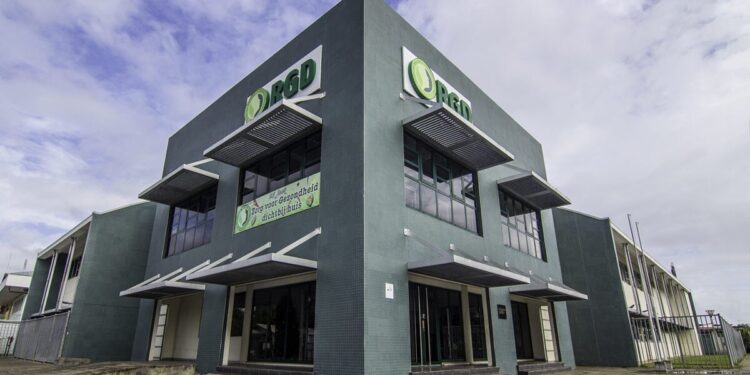
Developments regarding employment conditions are being closely watched, as any action plan could have consequences for the organisation of work. For current information about the institution and its healthcare services, the official website of the Regional Health Service can be consulted. The discussion over the bridging allowance and other outstanding collective labour agreement amounts continues in the meantime.
For now, it is unclear whether management will amend its payment proposal. According to the union, management wants to continue spreading the outstanding funds until February 2027, while the employee representative is pressing for faster settlement. This difference in approach remains a major obstacle in the consultations and could determine whether the threatened action goes ahead.
Staff await clarity on payments
The upcoming General Membership Meeting will therefore be an important moment for the further course of the labour dispute. The union will have to indicate how much room remains for consultations and what action members are prepared to support. At the same time, the question remains of when the one-off payment, the remaining TWK amounts and the disputed bridging allowance will actually be paid.
The union maintains that the financial agreements must not be postponed further than necessary. If management does not make a new proposal, the action plan will be discussed and prepared further from Monday. Developments surrounding the bridging allowance will therefore determine whether the dispute can be resolved through further consultations or will result in industrial action.