Preparations for the BIO-SWEET project have begun in 26 Indigenous and tribal communities in southern Suriname, the Matawai area and Upper Suriname. The project is intended to provide these villages with access to electricity, clean drinking water and telecommunications, while also stimulating local economic development.
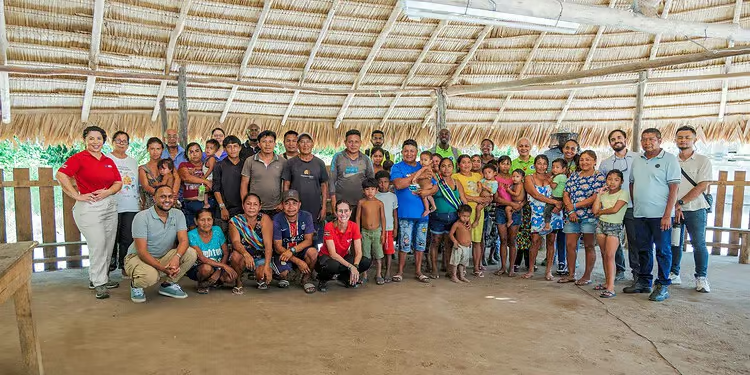
Representatives of the organisations involved visited the communities between 6 and 27 August. During the meetings, residents were informed about the planned facilities, the various implementation phases and the expected work. They were also given the opportunity to ask questions and put forward their wishes and concerns.
According to BIO-SWEET project manager Jerry Aseja of Energiebedrijven Suriname (EBS), the preparation period consists of eight phases. This will be followed by the tendering and awarding of contracts for the electricity and drinking water facilities.
The contract awards are expected to be completed in early 2027. Technical work is due to begin around the middle of that year. Preparations for the telecommunications facilities are also proceeding in phases.
Electricity, drinking water and internet
The Ministry of Natural Resources has a policy-making and supervisory role. The project was developed with support from the Inter-American Development Bank (IDB). The bank is financing its implementation.
EBS coordinates a large part of the project and is responsible for the construction of the electricity and drinking water facilities. Telesur is responsible for the telecommunications component.
The Amazon Conservation Team Guianas (ACT-Guianas) is implementing the social and economic programme. Technical company Trama Techno Ambiental is supporting the implementation of the technical work.
In addition to infrastructure and bioeconomic development, the project includes strengthening institutions and local capacity. It also contains components for project management, supervision and financial control.
Sustainable income for communities
BIO-SWEET focuses not only on constructing facilities, but also on creating sustainable sources of income. It builds on the knowledge, products and opportunities already present in the communities.
Possible activities include agriculture, handicrafts, community-based tourism, processing local products and stingless beekeeping for honey production.
Income from these activities is intended, among other things, to help residents pay for electricity and drinking water. The communities must also be able to contribute to the maintenance and sustainable management of the facilities.
The project is also examining whether local young people can receive technical training. They could later be deployed in the management and maintenance of the electricity and drinking water systems.
Communities spread across four areas
In southern Suriname, Kwamalasamutu, Kawemhakan, Kumakapan, Apetina, Sipaliwini Savanna, Alalapadu, Pelele Tepu, Palumeu, Kuruni and Amotopo were visited.
The Upper Matawai cluster includes Pusugrunu, Sukibaka, Piketie, Bethel, Tevreden, Padua, Boslanti, Vertrouw, Pniel and Wanhatti. The Nieuw Jacob cluster comprises Nieuw Jacobkondre, Baling, Misalibi and Bilawatra. In Upper Suriname, Duwatra and Bekiokondre were visited.
The kick-off meetings followed an earlier consultation and validation process, during which the communities had already provided input on the planned developments.