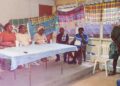





The delegation was accompanied by the presidential School Feeding Project working group and visited VOJ Atjoni, LBO Atjoni and the EBGS Scholencomplex Pokigron. The representatives spoke with school leaders, teachers and pupils about their experiences during the past school year. They also gained insight into the preparation and distribution of the meals.
At VOJ Atjoni, 40 pupils participated in the programme, while 26 pupils at LBO Atjoni received a meal. According to Daniela Rosario, secretary of the working group on behalf of the Ministry of Education, Science and Culture, the experiences of both pupils and education staff have been predominantly positive.
Schools call for expansion and better planning
The acting director of VOJ Atjoni, Nathalie Plet, and the coordinator of LBO Atjoni, Steve Jeroe, expressed their appreciation for the initiative. At the same time, they pointed to several areas for improvement. The school leaders called for an earlier start to the programme and for its expansion, so that all registered pupils can be provided with a meal.
In addition, it was proposed to vary the food offered by providing bread meals two days a week and hot meals three days a week.
According to the schools, delivery times also require attention. In some cases, the meals are delivered too early, meaning distribution does not optimally align with the school schedule.
“For the working group, the task now is to consider how we can improve this,” Rosario said.
More attention to healthy food and local production
When compiling the menu, consideration is given to a balanced distribution of nutrients, including proteins and starches. The aim is to offer pupils healthy and nutritious meals.
In addition, ways are being explored to involve local food producers more closely in the programme. This could reduce dependence on food transport from Paramaribo. Local procurement could also contribute to economic activity within the communities.
Findings incorporated into new programme
The presidential working group will use the findings from the field visit in preparing the next phase of the school feeding programme. This will include examining improvements in organisation, food provision and distribution.
Rosario emphasised that the ultimate goal is to give as many schoolchildren as possible structural access to healthy food.
“It gives a positive feeling that we are engaged in something good. The intention is to provide as many children as possible with a healthy meal. Ultimately, we hope to achieve a sustainable school feeding project,” Rosario said.