


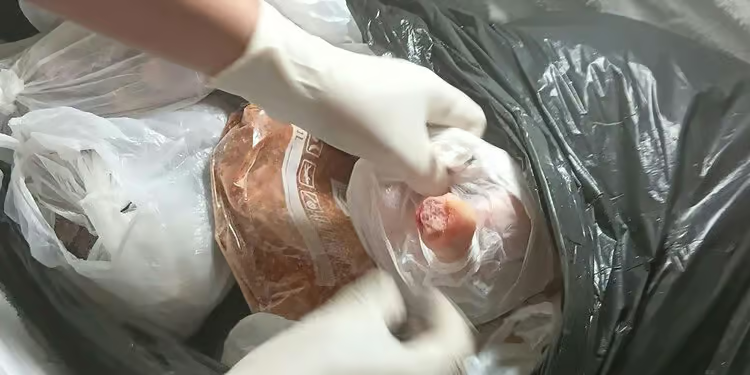
During checks at various border posts in Suriname, animal products that do not comply with the applicable import regulations are still regularly found.
According to the Directoraat Veeteelt of the Ministry of Landbouw, Veeteelt en Visserij (LVV), some travellers even attempt to bring these products into the country concealed. Goods that do not meet the legal requirements are confiscated and destroyed.
The violations are identified during checks at the Johan Adolf Pengel Internationale Luchthaven, the Eduard Alexander Gummels Internationale Luchthaven and the checkpoint at Stolkertsijver.
According to Charleen Djamin, coordinator of the Grenspost Bewaking department, passengers still too often bring meat, dairy products, eggs and other products of animal origin without the required import permit. Products also regularly fail to meet packaging and labelling requirements.
Travellers attempt to conceal products
Djamin states that some passengers deliberately attempt to bring along prohibited products in a concealed manner. This happens despite repeated announcements and warnings by the Directoraat Veeteelt about the applicable import rules.
The ministry emphasises that these checks are necessary to protect the national livestock population against animal diseases and other veterinary risks that may arise from the import of animal products.
Strict conditions for imports
Under Article 27 of the Wet Inspectie Vlees en Overige Dierlijke Producten (S.B. 2017 no. 17), it is prohibited to import meat and other products of animal origin into Suriname without the required authorisation.
The regulations cover, among other things, meat products, eggs, dairy products, feathers and hides. Specific veterinary conditions apply to imports. Importers must have the required permit and the products must originate from recognised and approved establishments.
In addition, the goods must be accompanied by an international veterinary certificate, issued by the competent authority of the country of origin and the exporting country. This document must be drawn up in Dutch or English, or be accompanied by an official translation into one of these languages.
Confiscation and destruction
The Directoraat Veeteelt warns that products that do not meet the legal import requirements will be confiscated and destroyed in accordance with Article 31 of the law.
According to the ministry, compliance with the rules is of great importance in preventing contagious animal diseases from being introduced across the country’s borders.
LVV therefore calls on travellers to inform themselves in advance about the import regulations and not to bring animal products into Suriname without the required documents. In doing so, passengers can not only prevent their goods from being destroyed, but also contribute to protecting Suriname’s livestock population.


