





Divali, the Hindu festival of lights celebrated worldwide on Sunday, 8 November, is primarily about togetherness, love and forgiveness, according to pandita Vandana Rampertap. The religious leader stresses that the celebration is not intended only for family members, but also offers an opportunity to strengthen mutual bonds within Surinamese society.
In a conversation with the Communicatie Dienst Suriname (CDS, Suriname’s government communication service) on Friday, 6 November, at the main mandir of Arya Dewaker, Rampertap reflected on the deeper meaning of Divali. According to her, the festival of lights goes beyond lighting dias and organising festive activities.
“Divali is a moment of being together. Not only with your own family, but also with your neighbours, your friends and acquaintances,” the pandita said. She emphasises that unity, love and forgiveness are central to the celebration.
Message of unity in diverse society
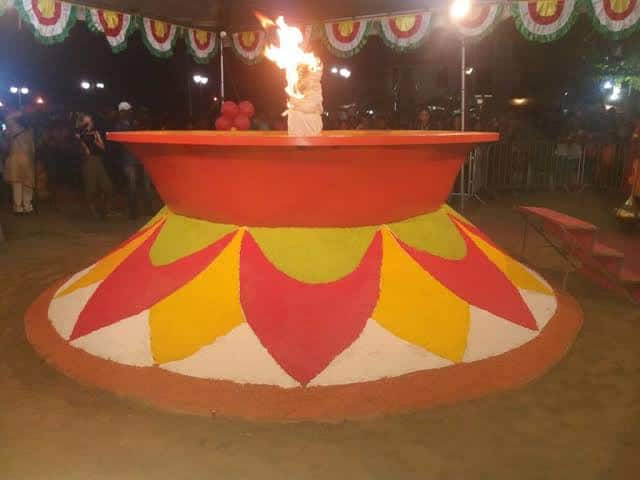
Rampertap points out that Suriname is characterised by great cultural and religious diversity. It is precisely during Divali, she says, that the connection between different population groups becomes apparent. The joint celebration at Onafhankelijkheidsplein in Paramaribo is an example of this. A giant diya has been placed on the square especially for the occasion.
The pandita refers to a mantra within Vedic Dharma, which she says calls for equality and mutual connection.
“The mantra tells us that we are all human beings. Regardless of race, culture, rich or poor. We are all human beings created by one great, powerful supreme power. And why should there then be division?” she asks.
According to Rampertap, the essence of Divali therefore lies in overcoming division and promoting harmony. “That is the message of Divali,” she states.
Preparations and symbolism of light
In the run-up to Divali, Hindu families make various preparations. Homes and yards are cleaned, while attention is also paid to inner cleansing. According to Rampertap, these actions symbolise letting go of negativity and making room for a new beginning.
In addition, traditional dishes are prepared and dias, small oil lamps, are lit on the holiday. The light symbolises the dispelling of darkness and the triumph of good over evil.
Cultural and religious activities
At various locations in Suriname, processions and religious gatherings are organised on the occasion of Divali. Local associations organise activities in which participants walk together to the mandir.
“We then walk to the mandir. And then the further activities are held there,” Rampertap explains.
The celebrations are generally supplemented with cultural programmes, including theatre and dance performances, speeches and shared meals.
With her message, Rampertap calls on society not to view Divali solely as a religious holiday, but also as a moment to reflect on the values of tolerance, mutual respect and togetherness.