


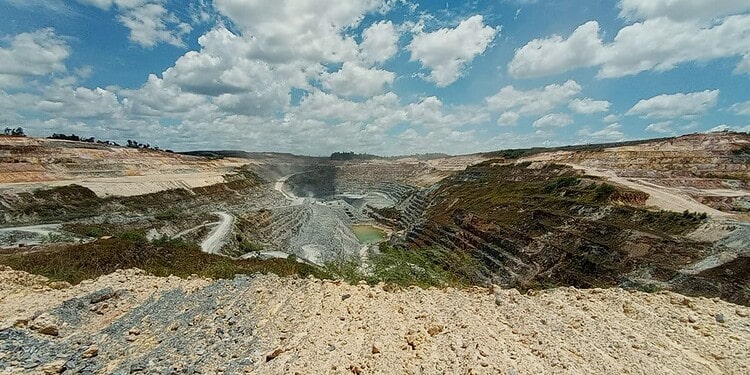
Newmont Suriname says it has contributed approximately US$ 4.74 billion to the Surinamese economy over the past ten years. Out of total revenue of approximately US$ 6.6 billion, an average of about 73 percent of the income generated remained in Suriname, according to the mining company. Shirley Sowma-Sumter, Director External Relations and Country Manager of Newmont Suriname, said this during the celebration of ten years of commercial production at the Merian gold mine.
During her presentation, Sowma-Sumter gave an overview of Newmont’s economic contribution since the start of commercial production. According to her, the share that remains in Suriname is gradually increasing. In 2025, this amounted to approximately 75 percent, according to the company’s figures.
“What we see is that this percentage is gradually increasing and rising,” Sowma-Sumter said. According to her, the average over the past ten years has reached approximately 73 percent.
US$ 1.54 billion to the government
Of the total contribution of US$ 4.74 billion, approximately US$ 1.54 billion went towards state revenue and the government budget, according to Sowma-Sumter. The amount includes revenue related to Staatsolie’s stake in the Merian operation, royalties and tax payments.
According to her, Newmont pays 6 percent royalties on revenue. The company also pays income tax and payroll tax.
“If we look at the composition of this amount of US$ 4.74 billion, then it consists of three components, three categories,” Sowma-Sumter explained.
A second major component consists of salaries. Over the past ten years, Newmont has paid approximately US$ 504 million in wages and salaries, according to the presentation.
US$ 2.7 billion to suppliers and contractors
The largest individual amount went to suppliers and contractors. Over ten years, approximately US$ 2.7 billion was paid to vendors and contractors, according to Newmont.
Sowma-Sumter described this amount as an important indicator of Newmont’s contribution to Surinamese businesses. “This figure, this amount, indicates what Newmont’s contribution to the business sector has been. This is what we have contributed to our suppliers and our contractors.”
Annual national procurement has also grown considerably, according to her. In 2016, it amounted to approximately US$ 160 million. By 2025, that had risen to approximately US$ 345 million.
“It is important to say that this amount also increases every year,” Sowma-Sumter said.
Contribution beyond money alone
The Country Manager emphasised that, in her view, the financial figures do not show Newmont’s full impact. In addition to direct financial contributions, the company has also invested in employee development and the strengthening of local businesses, she said.
“What these figures do not say is the qualitative contribution Newmont has made,” Sowma-Sumter said. “We have worked on capacity building for our employees. We have worked on strengthening the capacities of the business sector.”
According to her, Newmont’s share in the Surinamese economy is also growing as a result. She stressed that increasing local economic impact is a long-term process.
“It is a process. It is a process that does not become successful overnight. But if we look at a period of ten years, then we see that 73 percent has become the average.”
Spending more locally
To further increase its economic contribution, Newmont intends, according to Sowma-Sumter, to continue investing in its employees and to procure more goods and services locally.
“We must continue investing in our workforce. We must continue investing in our national spend and make the business sector stronger,” she said.
According to her, Newmont has established special programmes for this purpose to further develop the capacity of Surinamese companies. The company also wants to further increase its contribution to state revenue.
Sowma-Sumter noted that the share remaining in Suriname will never amount to 100 percent. Part of the expenditure consists of foreign purchases, while Newmont’s profit also falls outside the local spending percentage. However, the aim is to further increase the Surinamese share, she said.


