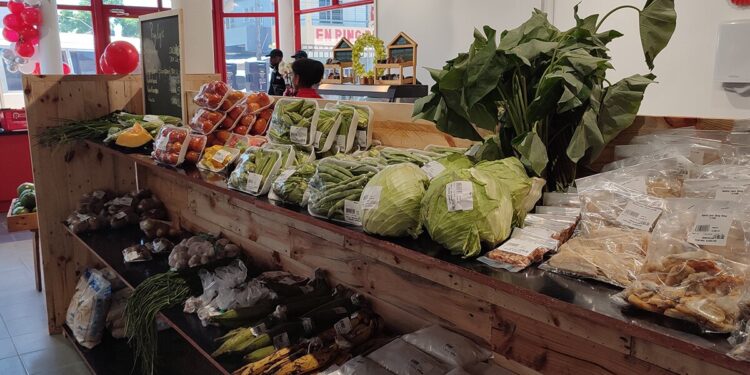
Farmers are deeply concerned about the lack of rain and declining purchasing power. “With the drought, the price of vegetable varieties has increased, but sales are very minimal, because purchasing power has declined sharply,” says farmer Vishnu Dhawtal from Damboentong, Saramacca.
The farmer says that due to the drought, farmers have to invest more money in keeping their crops healthy. According to the Meteorological Service Suriname, this is an El Niño year. It will therefore be extra dry this year compared to previous years, when there was La Niña.
In recent years, it even rained during the major dry season. Dhawtal had not taken this phenomenon into account and, as in previous years, had expected rain during the major dry season. He did not store any water and is therefore dependent on water in the creeks running alongside his agricultural plots. He risks losing his pepper and tomato crops and will have to take action quickly.
In recent years, he had no difficulty making investments in his crops, because he was sure he would earn the money back. “But now the situation has changed.” What makes the situation worse this year is the decline in purchasing power. Due to the drought, prices of the various vegetable varieties have risen further. As a result, sales have declined because purchasing power has fallen. “Customers stop, take a look and leave again.”
Farmer Pradeep Sewpersad from Tijgerkreek, Saramacca, was also not prepared for this major dry season. “It has not rained here for almost a month and I am now in a tight spot.” He has already lost his cucumber and watermelon crops, which are very sensitive. “The yield from both crops was very disappointing and it can be counted as a loss.”
He now plans to deepen his creeks, but for the time being he does not have the money to pay for an excavator. He too has doubts about putting more money into his pepper and tomato crops, because he strongly feels that, due to declining purchasing power, he will not be able to make any profits.