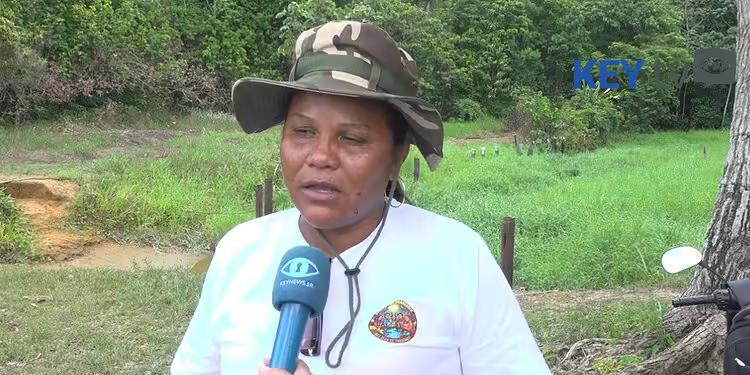
While pollution of the Saramaccarivier has been a matter of concern for months, the community of Gran Kreek was only recently officially warned not to fish, swim or use the water in the creeks. Captain Angelique Palmtak calls that late warning “very sad” and says confidence in the government has declined sharply within the community.
Palmtak says she was formally involved in the process surrounding the pollution about a week to a week and a half ago. Before that, she had already advised residents on her own initiative to be cautious. “I myself already told the people: it is better not to swim or fish. But now it is official,” the captain tells journalists.
According to her, it is incomprehensible that communities along creeks directly connected to the Saramaccarivier were not included earlier in the investigation and the warnings.
“That is very sad. The Saramaccarivier has many creeks. Water flows in and back out. Then those areas must also be investigated,” Palmtak states.
Community dependent on fishing
The warning has hit Gran Kreek hard. Many residents depend on fishing, hunting and the use of natural water sources for their daily food supply.
“In our community, people live from fish, fishing and hunting. This is really serious,” Palmtak says. According to her, the government cannot therefore suffice with only a ban or warning. There must also be clarity on how long the situation will last and what support will be available for residents who are temporarily unable to use their usual food sources.
‘How long must people wait?’
Palmtak says she already raised questions about follow-up investigations during a meeting in Pikin Poika. She wants to know how often the water and fish will be tested again and when residents will be able to safely use the creeks again. “When can we use our creeks again? When can we fish again? You came to conduct research, but will you come back? And after how many weeks?”
According to the captain, earlier meetings indicated that harmful substances had also been found in live fish. According to her, this raises even more questions about possible long-term exposure. “If it is now in live fish and people have already eaten those fish, who says that pollution was not there earlier?”

Trust in government damaged
When asked how much confidence she still has in the government and the Nationale Milieu Autoriteit (National Environmental Authority), Palmtak is clear. “Trust? I will honestly say: fifty percent. We as communities are losing confidence in the government because of the way we are being treated,” she says.
According to her, government agencies must communicate more actively and involve communities directly as soon as there are risks to water, food supply and health. “If you do not take the initiative yourself or make contact, it seems as if no one hears you.”
No clarity on cause
Palmtak says that no definitive explanation was given during the meeting she attended about the exact cause of the pollution. She points out that residents in the interior have long been concerned about the impact of economic activities and the use of chemical substances on the environment.
However, she emphasises that research must determine exactly which substances were found in the water and fish and where they came from.
Residents await the green light
For Gran Kreek, the current situation means that residents do not yet know when they will be able to safely fish, swim or use the creek water again.
Palmtak believes that, in addition to further research, the government must also provide concrete support. “The people are waiting to be able to fish again, but at the same time they are also waiting for the government. What is the government doing concretely for these communities?”
According to her, food parcels were distributed earlier, but little structural support has been visible since then. The community is now awaiting new research results and an official decision by the competent authorities on when the water and fish can again be considered safe.