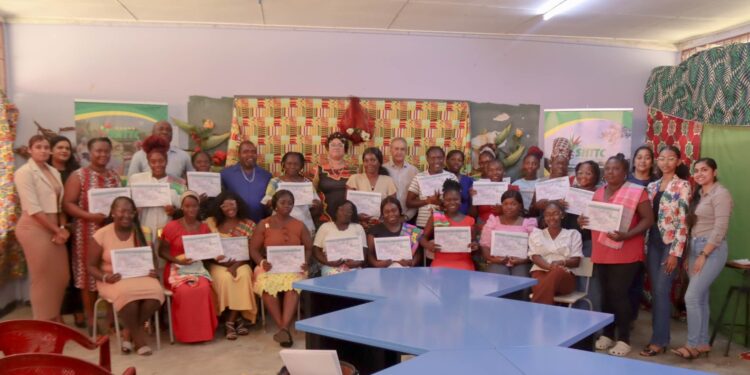
In Atjoni, 26 participants received their certificates on Friday for the Kitchen Assistant Level 1 training. The locally trained kitchen assistants can be deployed at lodges, resorts, catering companies and other tourism facilities in the district of Sipaliwini.
The certificate presentation took place at the LBO practical training centre in Atjoni. During the training, participants learned the basic skills of food preparation. They were also trained in professional food handling, kitchen hygiene, food safety and working safely in a kitchen.
According to the Ministry of Volksgezondheid, Welzijn en Arbeid (VWA, Public Health, Social Welfare and Labour), the participants can use their new skills to contribute to the further professionalisation of tourism services in the interior. They can also start their own catering business, local eatery or meal delivery service.
Training fully subsidised
The programme was fully financed through the Labour Alignment with New Industries project of the Inter-American Development Bank (IDB). As a result, the participants did not have to incur any costs.
The training was implemented by the directorate of Welzijn en Arbeid and provided by the Stichting Suriname Hospitality and Tourism Training Centre (SHTTC). The programme formed part of the Leri Fu Feni Wroko project (Learn to Find Work) and was carried out under the Training for Employment concept.
Local dishes as a tourist attraction
Deputy Minister of VWA Raj Jadnanansing pointed during the certificate presentation to the opportunities tourism offers residents of the interior. According to him, food plays an important role in visitors’ experience.
He called on the participants to use their knowledge not only to prepare general dishes, but especially to present local dishes and ingredients to tourists in a professional and hygienic manner.
According to Jadnanansing, visitors to the interior seek experiences they cannot have at home. Local dishes can therefore serve as a gateway to the culture of the communities.
According to him, a professional presentation of these dishes can not only generate employment, but also contribute to preserving cultural identity and increasing the economic value of local products.
Need for qualified personnel
Representatives of the IDB and SHTTC also stressed the importance of vocational training in the interior.
Oyeleye Adeniyi, programme manager of the IDB Project Implementation Unit, SHTTC acting director Nazara Kranenburg and board chair Don Elliot pointed out that investments in local human capital are needed to meet the growing demand for qualified workers in the tourism sector.