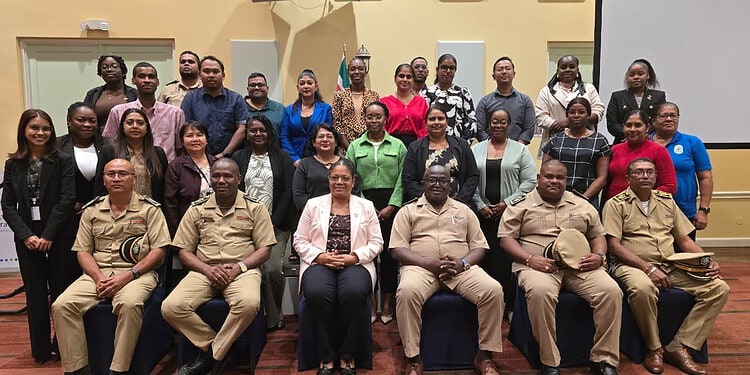
The Directoraat Internationale Samenwerking (DIS) (Directorate for International Cooperation) held a national workshop on sustainable waste processing and composting on Tuesday, September 8. The meeting focused on SDG 15, which is aimed at the protection and sustainable use of terrestrial ecosystems.
The workshop took place in the Royal Ballroom at Torarica and was organised by the ministerie van Buitenlandse Zaken, Internationale Handel en Samenwerking (Ministry of Foreign Affairs, International Trade and Cooperation). DIS director Elizabeth Bradley officially opened the event on behalf of Minister Melvin Bouva.
Bradley stressed that the Sustainable Development Goals, better known as the SDGs, form an international framework that guides countries in achieving sustainable development.
“Development only has meaning when it benefits people in the long term and no one is left behind,” Bradley said.
According to her, the global evaluation of the SDGs shows that only 36 percent of the goals are on track worldwide. Climate shocks, economic instability and conflicts complicate implementation. Therefore, the application of the development goals must be accelerated, particularly at the local level.
Composting supports sustainable agriculture
During the workshop, particular attention was paid to composting and the sustainable processing of waste. According to the ministry, composting contributes to healthy soils, sustainable land use and combating land degradation.
Healthy soils are more resistant to erosion and depletion and form an important basis for sustainable agriculture. By composting organic household waste, useful raw materials can also be reused.
Bradley pointed out that this approach is in line with government policy to further develop the agricultural sector.
Attention to poaching and illegal trade
Other components of SDG 15 were also discussed, including tackling poaching and the illegal trade in protected plants and animals. According to Bradley, these issues are particularly relevant to the districts of Marowijne, Brokopondo and Sipaliwini. She stated that separate sessions are needed on these matters.
The DIS director called on district commissioners and other participants to apply the knowledge gained in their districts, communities and organisations. According to her, they form an important link between national policy and local implementation.
Bradley stressed that most of the policy work surrounding the SDG agenda has been completed. The emphasis must now be placed on the practical application of the goals in local communities.