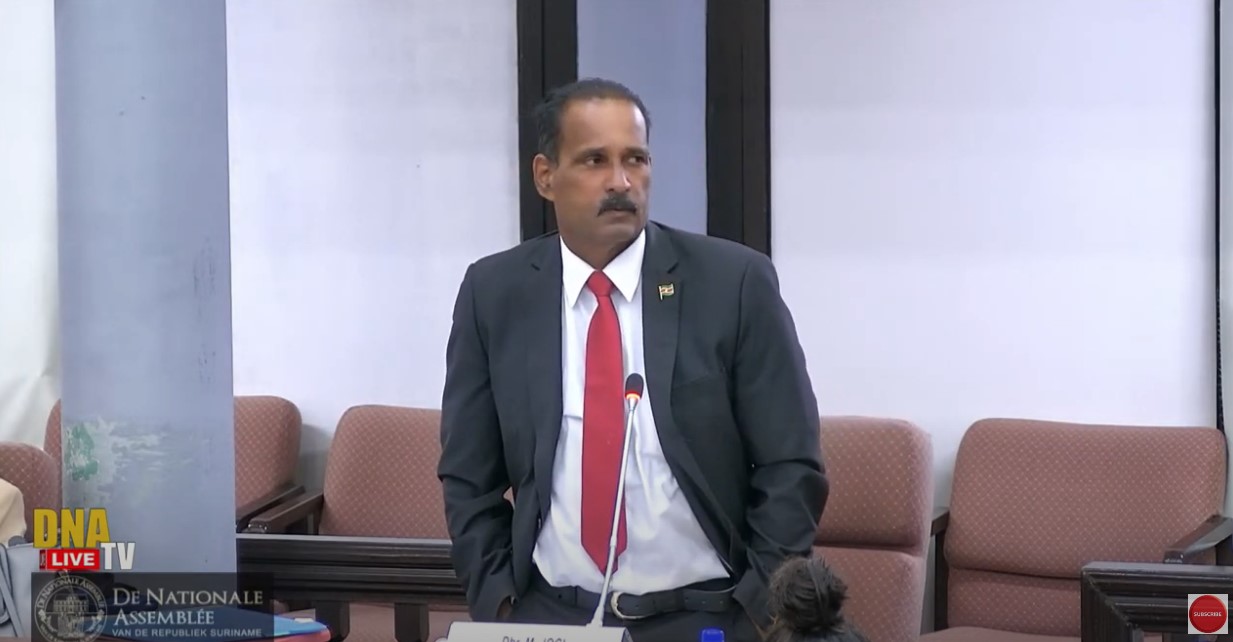





VHP members of De Nationale Assemblée (Suriname’s parliament) Hakiem Lalmahomed, Cheryl Dijksteel and Natalie Amatmohamed have submitted three interconnected private members’ bills intended to thoroughly modernise higher education in Suriname.
They concern the Higher Education Act, the Higher Education Accreditation Act and the ADeKUS Act 2026. With these bills, the initiators aim to create a coherent legal framework for universities, colleges and other higher education institutions.
According to the submitters, the existing legislation no longer meets current requirements in several respects. The reforms are intended to ensure that Surinamese programmes are better aligned with international educational standards and labour market needs.
One legal framework for higher education institutions
The proposed Higher Education Act is intended to lay down general rules for the structure, organisation and quality of higher education. Universities, colleges and open universities will be given a clearly defined place within the national education system.
An important innovation is the introduction of an education register in which institutions and programmes will be registered. This is intended to provide better insight into the educational offering and the institutions providing programmes.
In addition, the bill provides for rules on Associate Degree, bachelor’s, master’s and PhD programmes. Provisions will also be included on credits, study workload, academic degrees and titles.
The proposal further provides room for dual programmes, combining education and practical experience. With this, the initiators aim to strengthen the connection between higher education and the labour market.
The subsidisation of programmes will also be addressed. According to the proposal, quality and societal need should play a more important role in granting financial support.
New accreditation body to safeguard quality
A second bill concerns the accreditation of programmes. Central to this is the establishment of the Nationaal Orgaan Voor Accreditatie (NOVA) (National Accreditation Body).
According to the proposal, this body is to become responsible for an independent system of quality assessment for existing and new programmes.
The new law is intended to replace the current accreditation framework with a modernised system that better reflects regional and international developments.
One of the proposed measures is the establishment of a public accreditation register. This would allow students, parents and employers to verify which programmes are officially accredited.
Provision is also made for the possibility of assessing foreign accreditations through an equivalency test. This should contribute to better international comparability of programmes.
The initiators link this to the objectives of the Caribbean Community (CARICOM), including promoting the mobility of highly educated people within the region.
The proposed reform may be particularly important for students, as the quality and recognition of their programme can be decisive for further study or employment at home and abroad.
Anton de Kom Universiteit to receive new governance structure
The third private members’ bill specifically targets the Anton de Kom Universiteit van Suriname. The current University Act dates from 1966 and, according to the explanatory memorandum to the proposal, is insufficiently aligned with current developments in academic education.
The ADeKUS Act 2026 must therefore provide a new legal basis for governance, academic organisation and scientific research at the university.
One of the main changes is the introduction of a governance structure with a board and a supervisory board. In addition, the position of faculties, interfaculty bodies and research institutes will be strengthened.
There will also be clearer rules for bachelor’s, master’s and doctoral programmes, academic degrees and the awarding of titles.
The bill also addresses scientific research, public service and the university’s responsibility towards society.
Academic freedom and ethical guidelines must likewise be given a clear legal basis.
Reforms must align with economic development
According to the submitters, the three private members’ bills were deliberately developed as one coherent package. The general Higher Education Act must form the foundation, while the accreditation act focuses on quality assurance and the ADeKUS Act on modernising the national university.
The proposals may affect the way educational institutions are governed, programmes are assessed and public funds are allocated.
For Suriname, the connection between education and the labour market is an important point of attention. By aligning programmes more closely with societal and economic needs, the submitters aim to increase the availability of qualified workers.
Implementation and financing remain important points of attention
Although the private members’ bills envisage a far-reaching reform of higher education, the ultimate impact will depend heavily on practical implementation.
The establishment of a new accreditation body, the introduction of education registers and the adjustment of university governance structures require organisational capacity, expertise and financial resources.
The explanatory memorandum provided does not indicate what costs the reforms will entail, how implementation will be financed or within what timeframe the new structures must become operational.
It is also not yet clear which transitional arrangements will apply to existing educational institutions and students currently enrolled in a programme.
The bills still have to be considered by parliament. Only after approval and entry into force can the proposed changes actually be implemented.
According to Lalmahomed, Dijksteel and Amatmohamed, improving higher education is necessary to support Suriname’s sustainable development and economic growth. With the three private members’ bills, they aim to lay the foundation for an education system that better prepares students for the demands of society and the international labour market.