






The Government of Guyana is under fire over the alleged direct award of fuel contracts to BB Energy. According to the newspaper Kaieteur News, the contracts for powerships were awarded without a public tender, while questions also exist about the company’s international business background.
The Government of Guyana is facing questions over the fuel contracts with BB Energy, an international energy trading company linked to the supply of heavy fuel oil to powerships. According to a publication by Kaieteur News on Friday, October 30, 2026, the contracts were awarded without a public tender procedure.
The Guyanese outlet cites sources within the government and the energy sector. According to these sources, the National Procurement and Tender Administration Board (NPTAB), the national body overseeing public procurement, was bypassed in the awarding of the contracts concerned. The exact contract value and terms were not disclosed in the report.
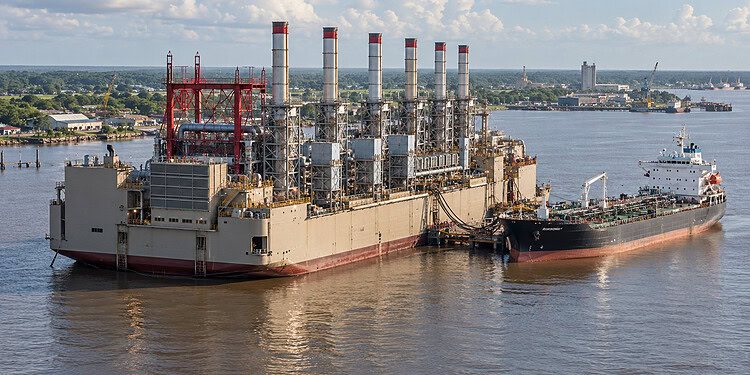
The allegations concern the fuel supply for two so-called powerships currently being used to support Guyana’s electricity grid. These are floating power plants that generate electricity using fuel and then supply power to the national grid.
BB Energy fuel contracts raise questions
The main question is why, according to the reporting, the government did not opt for a public tender. Under such a procedure, various companies can submit bids, after which the government can assess the proposals based on price, quality, security of supply and other conditions.
The absence of a public tender does not automatically mean that a contract is unlawful. That depends on the applicable Guyanese legislation, any exemption provisions and the manner in which the decision was made.
Because the full contract documents are not publicly available, it cannot be independently established from the reporting whether the government actually violated procurement rules.
Guyana dependent on powerships
Guyana currently uses two powerships to make up for shortages in generation capacity. One vessel is located in the Berbice River and has a capacity of 36 megawatts. The second vessel is in the Demerara River and, according to earlier official statements, has a contracted capacity of 75 megawatts.
The vessels are part of agreements under which the government rents electricity generation capacity. Guyana Power and Light (GPL), the state-owned company responsible for electricity supply, must also provide the heavy fuel oil needed to keep the installations operating.
As a result, the costs consist not only of the rental and maintenance of the vessels, but also of the purchase and delivery of fuel. Particularly in the case of long-term use, these fuel expenses can account for a substantial part of the total costs.
Opposition raises questions about financial interests
Opposition leader Azruddin Mohamed, according to Kaieteur News, has criticised the continued dependence on rented power plants. He questions why the government is not moving more quickly towards permanent solutions for electricity supply.
Mohamed has also raised questions about possible personal financial benefits for government officials involved in fuel contracts. No independently established evidence is presented in the cited publication for this suspicion.
The lack of public contract information raises questions about the spending of public funds.
The issue therefore concerns not only the choice of a fuel supplier, but also the verifiability of government expenditure. Disclosure of the procurement method, contract value and selection criteria could provide greater clarity about the decision-making process.
International background of BB Energy examined
Kaieteur News also draws attention to earlier controversies in which BB Energy and business parties linked to the company have been mentioned. The company is controlled by the Bassatne family, which originates from Lebanon.
In Lebanon, BB Energy previously appeared in reporting concerning the supply of fuel to the state electricity sector. This raised legal questions about procurement procedures, subcontracting and the quality of delivered fuels.
The international outlet The National also published in September 2026 about an investigation by Lebanese authorities into the origin of imported fuel. It discussed shipping transactions in which BB Energy was mentioned, as well as possible business links with companies associated with sanctioned Russian oil trade.
The fact that a company is mentioned in an investigation or international reporting does not in itself constitute evidence that it has committed criminal offences. Nor does it establish that fuel deliveries to Guyana were carried out unlawfully.
Investigation into Russian oil trade
One of the issues cited by Kaieteur News concerns a fuel shipment from 2025 that reportedly involved the tanker TM Hai Ha 568. According to reporting by The National, the oil came from a supplier linked to a network of companies involved in international Russian oil trade.
The matter is relevant because international sanctions may impose restrictions on certain companies, trading arrangements and financial transactions. It is therefore important for importers and governments to carefully determine who the ultimate suppliers and trading parties involved are.
However, no evidence was presented in the reporting consulted that the fuel supplied for the Guyanese powerships originates from a sanctioned supply chain.
New power plant must reduce dependence
The government of President Irfaan Ali is meanwhile working on the Gas to Energy Project, under which natural gas from offshore oil production is to be used for electricity generation on land.
The project is intended to reduce dependence on imported heavy fuel oil in the long term. According to Minister Deodat Indar, electricity generation using gas is considerably cheaper than using rented vessels running on heavy fuel oil.
The minister announced in August that the contract for the vessel in the Berbice River had been extended by two years. The future of the other vessel would partly be determined by progress on the Gas to Energy Project.
Meanwhile, Guyanese media have also discussed the possible arrival of a third, considerably larger powership. According to Kaieteur News, a capacity of about 300 megawatts is being considered. A final decision on this expansion has not been confirmed in the sources consulted.
Transparency on contracts and costs remains important
Several questions remain unanswered in the assessment of the Guyanese fuel contracts. It is not clear what amounts BB Energy receives, for what period the supply arrangements apply and why the contract method in question was chosen.
It is also important whether the government bodies involved compared prices with alternative suppliers and what guarantees were agreed upon for the quality and continuity of fuel deliveries.
The Kaieteur News publication makes clear that there is a need for more information about these agreements. An official explanation from the Government of Guyana and the procurement authority involved could help establish how the contracts were awarded and which legal procedures were followed.