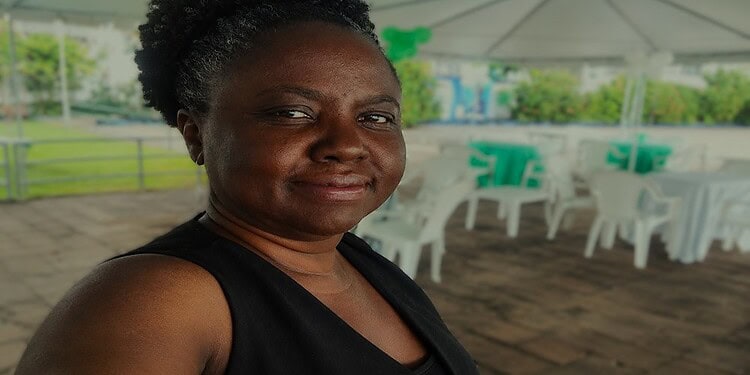
Suriname is not only facing a shortage of teachers. According to education professional Loraine Hooplot-Vreden, quality is also under pressure when unqualified teachers or insufficiently trained educators are placed in front of a class without the proper professional guidance.
Hooplot-Vreden says the problem of unqualified teachers is not new. Especially at junior and senior level, both partially qualified and unqualified educators are said to be working, according to her. The discussion should therefore not only be about the number of people standing in front of a class, but also about whether they are sufficiently equipped to help students progress.
She does not have exact figures on the scale of the problem. Hooplot-Vreden says she requested information on this from the Ministry of Education, Science and Culture, but did not receive it. It therefore remains unclear how many teachers are fully qualified, partially qualified or unqualified for the level at which they teach.
The issue will be central during a lecture that Hooplot-Vreden will give on Thursday, September 3, 2026, at the Lalla Rookh building. Under the title “Professional development of teachers: Who is responsible for teacher quality?” she primarily wants to discuss what can now be done for the educators already standing in front of a class.
Unqualified teachers require more than emergency solutions
The teacher shortage has again received considerable attention in recent months. Key News reported on August 23 that at least 214 teachers are missing in various parts of Surinamese education. The ministry is considering graduates, retired teachers, retraining and digital education, among other measures, to fill vacancies.
According to Hooplot-Vreden, however, the discussion must not end with filling vacant positions. “This is not only about being unqualified, but also about incompetence,” she states. An educator can formally be placed in front of a class, but according to her, this does not yet guarantee that person has sufficient subject knowledge, pedagogical skills and teaching quality.
Teacher quality remains decisive
“If the teacher does not have the required level, they will not be able to take students to greater heights,” Hooplot-Vreden says. According to her, this brings the discussion to a broader policy question. It is not only about having enough people in classrooms, but also about the quality of the education students receive every day.
The teacher shortage can increase that pressure. When qualified teachers leave and vacancies are difficult to fill, schools may be forced to deploy other people. Hooplot-Vreden also points to financial recognition and increasing workload as factors affecting the profession. “More and more is being demanded of the teacher,” she says.
“Invest in the teachers you have.”
Global shortage makes professionalisation even more important
The teacher shortage is not only a Surinamese problem. According to UNESCO, around 44 million additional teachers are needed worldwide to achieve universal primary and secondary education by 2030. The organisation not only warns of shortages, but also stresses the importance of well-trained, supported and motivated teachers.
For this very reason, Hooplot-Vreden refers to the so-called “Love the One You’re With” strategy by education specialist Dylan Wiliam. Its core is that education systems should not exclusively wait for new or better-qualified teachers, but should also specifically invest in the professional development of people already working in education.
Professional development is a shared responsibility
“A school unfortunately cannot do that alone,” Hooplot-Vreden stresses. This brings the question of responsibility clearly into focus. Should the individual teacher ensure further development, does the main role lie with school management, or should the government create structural conditions for training and guidance?
According to Hooplot-Vreden, professional development should in any case not be an incidental activity. “Professional development is important. Continuous further training is necessary.” During her lecture, she also wants to address formative practice, in which teachers monitor students’ learning process and adapt their teaching accordingly.
Teachers in the interior must also gain access
According to her, professionalisation must not remain limited to Paramaribo and other urban areas. “Professionalisation applies to every teacher. Including those in the interior.” This means policy must take account of distance, accessibility and the practical opportunities for educators outside the capital to attend training and receive guidance.
For Suriname, this is an important point of attention. If the quality of education is to be strengthened, professional development will have to be accessible to teachers in all districts and in the interior. Offering courses or training only at locations that are not accessible to everyone may instead perpetuate existing differences.
No simple solution to a complex education problem
Hooplot-Vreden warns against reducing the problem to a single measure. Asked which three interventions she would implement immediately if she were responsible for education policy, she responds cautiously. “We have a complex problem that cannot simply be solved. There are no simple solutions to complex problems.”
Salary, training, workload, guidance, staff retention and quality assurance are interconnected under this approach. This makes the discussion about unqualified teachers broader than merely possessing a diploma. Those already standing in front of a class must be given the opportunity to further develop themselves, while clear quality requirements must remain necessary at the same time.
Figures on unqualified teachers remain necessary
A weak point in the current debate is the lack of public figures. Hooplot-Vreden says she does not have exact data on the number of partially qualified and unqualified teachers. Without such information, it is difficult to determine at which levels, schools or subject areas the problem is greatest and where professionalisation is most urgently needed.
Current data would enable policymakers to take more targeted measures. This concerns not only the number of vacancies, but also the qualifications of the people already teaching, the match between their certification and the level of education, and the support they need.
Lecture focuses on responsibility for quality
The September 3 lecture must ultimately lead to one central question: who is responsible for teacher quality? If a school out of necessity deploys a partially qualified or unqualified educator, it must be clear who is responsible for guidance, further training, evaluation and continued development.
The meeting will be held at the Lalla Rookh building at Lalla Rookhweg 54 and starts at 7 p.m. Doors open at 6:30 p.m. The public is required to pay a contribution of SRD 100 at the gate. Journalists are asked to register in advance. Whether the lecture will also be broadcast is not yet known, according to Hooplot-Vreden.