




Suriname is taking further steps to be removed from the European aviation blacklist. President Jennifer Simons held consultations on Tuesday, November 3, 2026, with representatives of the International Civil Aviation Organization (ICAO) and Surinamese aviation authorities. The meeting at the Cabinet of the President focused on addressing structural shortcomings within national aviation oversight.
Suriname is on the EU Air Safety List, meaning that Surinamese airlines subject to the European flight ban are not permitted to independently operate flights to or within the European Union. The government wants to see these restrictions lifted as soon as possible, but this requires far-reaching improvements in aviation oversight.
Those attending the consultations included Minister Raymond Landveld of Transport, Communicatie en Toerisme (TCT), presidential adviser for Aviation and Maritime Affairs Faizel Baarn, and ICAO representatives.
Recovery plan receives positive assessment
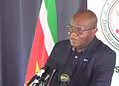
According to Anjulio Wolf, director of the Civil Aviation Safety Authority Suriname (CASAS), President Simons has made Suriname’s removal from the European safety list a priority. CASAS has been working for some time to improve the national oversight system. This includes cooperation with, among others, the European Union Aviation Safety Agency (EASA).
Wolf announced that a recovery plan and preventive measures have now been prepared and submitted. According to him, the initial assessment is positive. “The preliminary report has come in and it is very positive. So we can now move more quickly towards implementation,” the CASAS director stated. According to Wolf, this development makes it possible to begin implementing more extensive improvement measures needed to restore confidence in Surinamese aviation oversight.
European restrictions affect Surinamese aviation
Placement on the EU Air Safety List has consequences for the international operational capabilities of Surinamese airlines. According to Wolf, the European restrictions pose a particular problem for Suriname because of its geographical location next to French Guiana, which is part of France, and its existing air links with the Netherlands. “That is of course an enormous restriction, because Suriname borders Europe due to French Guiana. And of course, we have direct operations to the Netherlands. So our own capacity is being restricted, and we want to remove that as soon as possible,” Wolf said. Lifting the restrictions should once again give Surinamese airlines greater opportunities to operate international flights using their own capacity.
No quick solution to structural problems
Although the government wants to speed up the recovery process, the CASAS director warned that resolving the shortcomings will take time. “There is no quick fix for this, let that be clear. There are structural problems within Suriname’s oversight system that have built up over very long periods,” Wolf stressed.
According to him, a carefully developed improvement process is necessary to prevent the same problems from recurring in the future. Adequate resources, expertise and support from the government are important in this regard. The consultations with President Simons therefore also addressed the support CASAS needs to actually implement the planned reforms.
International cooperation must speed up recovery
In addition to cooperation with EASA and ICAO, efforts are also being made to secure further support from the regional cooperation body Sistema Regional de Cooperación para la Vigilancia de la Seguridad Operacional (SRVSOP). This organisation supports countries in improving safety and oversight within civil aviation.
Wolf stressed that the recovery plan has now received government approval. According to him, that political support forms an important basis for implementing the necessary improvements. “The foundation for moving towards the concrete implementation of larger improvement steps was laid today,” the CASAS director stated. It is not yet known when Suriname can actually be removed from the EU Air Safety List. First, it must be demonstrated that the identified shortcomings in aviation oversight have been sufficiently addressed.