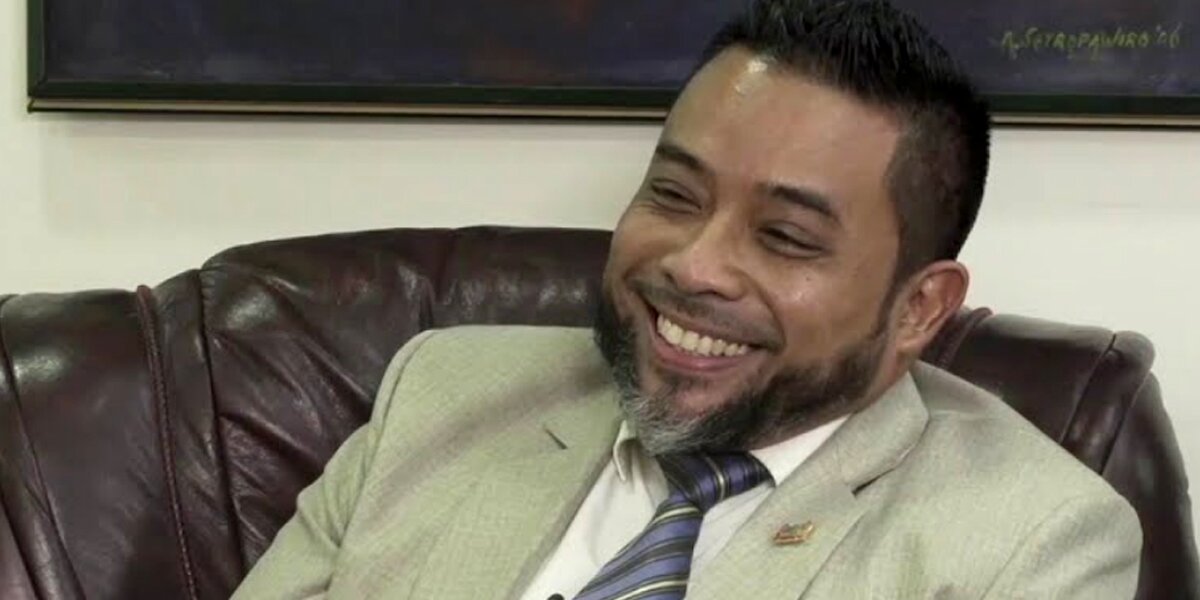
DNA member Jerrel Pawiroredjo sharply criticised planning at EnergieBedrijven Suriname in De Nationale Assemblee. According to him, the newly announced load shedding shows that structural decisions on capacity, investments and alternative energy sources can no longer be postponed.
The criticism of load shedding in Suriname flared up again after EnergieBedrijven Suriname announced that electricity consumption had risen more sharply in recent weeks than forecast. DNA member Jerrel Pawiroredjo told parliament that he had little understanding for the recurring shortages and the way the state-owned company responds to them.
“My greengrocer can plan better than EBS,” Pawiroredjo said. According to him, his greengrocer is able to take supply and demand into account, whereas this is insufficiently evident at a company responsible for an essential service. He pointed out that electricity is a basic requirement for economic development, service provision and the day-to-day functioning of households.
The parliamentarian stated that Suriname should not be repeatedly confronted with a shortage of generation capacity. He asked the government whether EBS produces sufficient forecasts and whether historical consumption data, growth figures and other statistics are actually used in planning the electricity supply.
Pawiroredjo links load shedding in Suriname to personnel policy
According to Pawiroredjo, attention should also be paid to the way managerial and other key positions within state-owned companies are filled. He suggested that the current shortage may partly result from insufficient expertise in crucial positions. “We really need to get rid of these political appointments now,” he said.
The criticism comes at a time when EBS itself has indicated that electricity consumption is greater than had been forecast. On 25 August, the company reported that available capacity was already under severe pressure and that no reserve capacity was available. As a result, parts of Paramaribo, Para, Wanica, Commewijne and Saramacca must be disconnected in rotation. According to the official statement by EBS, an outage can last at least three hours.
Questions about solar energy and new capacity
Pawiroredjo also asked the government about the progress of alternative energy projects. He referred to solar energy initiatives that, according to him, had previously been prepared by Staatsolie. The parliamentarian wants to know at what stage these projects are and what role EBS is playing in their implementation.
“What is the status of those projects? What is EBS doing about them, because we cannot continue like this,” Pawiroredjo said. The demand for alternative sources has been an issue for some time, as Suriname cannot remain solely dependent on existing thermal generation and hydropower for a stable electricity supply. New capacity also requires timely investments, clear decision-making and multi-year planning.
Asabina also questions EBS explanation
DNA member Ronny Asabina also criticised the information provided regarding the electricity problems. According to him, the information EBS shares with society is not always sufficiently verifiable. He asked the government to clarify exactly which factors are responsible for the current shortages.
“Is the load shedding related to increased fuel costs? Is there less money available to provide energy? Is this related to the capacity of the reservoir?” Asabina asked. He wants the government and the energy company to provide more insight into the financial, technical and operational causes of load shedding in Suriname.
“My greengrocer can plan better than EBS.”
Annual reports and transparency under scrutiny
Asabina also raised questions about EBS’s financial accountability. According to him, the company’s latest available annual report dates from 2018. He questioned how policy can be assessed and monitored when recent financial information is, in his view, unavailable or insufficiently available.
“How can policy be made and implemented in such a way?” the parliamentarian asked. The remarks touch on a broader debate about transparency at state-owned companies. For De Nationale Assemblee, current financial information is important in order to assess investments, subsidies, loans, operational costs and the need for new financing.
Electricity Act and role of the Energy Authority
Asabina also pointed to existing legislation for the energy sector and the role of the Energie Autoriteit Suriname. According to him, the law sets out how responsibilities within the sector should be divided, but that structure is still being implemented insufficiently. He stated that EBS should ultimately focus primarily on the distribution of electricity.
The Energie Autoriteit Suriname describes the Electricity Sector Plan as a policy framework for the further development and regulation of the electricity sector. It addresses, among other things, capacity planning, infrastructure, reliability and the future development of the sector. The discussion in parliament therefore focuses not only on the current power outages, but also on the implementation of existing plans.
Energy crisis was foreseen earlier
The current discussion on load shedding in Suriname does not stand alone. Key News reported in January 2025 that then EBS director Leo Brunswijk had already warned that approximately 30 megawatts of additional capacity was needed to address impending shortages. At the time, he spoke of tens of millions of US dollars that could be needed to temporarily bridge the energy crisis.
Vice President Gregory Rusland also stated this week that discussions with EBS must again be held about available capacity, the growth in electricity demand and necessary investments. According to Rusland, the problems in the energy sector did not arise suddenly and energy planning must look years ahead. Key News previously reported on this call by the vice president.
Political pressure on government increases
The remarks by Pawiroredjo and Asabina increase political pressure on the government to provide greater clarity on the causes of load shedding in Suriname and on the measures being taken in the short and long term. This concerns not only additional generation capacity, but also good governance, financial transparency and the implementation of existing plans.
EBS states that current electricity consumption is higher than anticipated and warns that the lack of reserve capacity makes the situation vulnerable. If a generating unit also fails unexpectedly, the shortage could increase further and more areas may have to be disconnected. The central question therefore remains how quickly new structural capacity can become available.
For citizens and businesses, the main concern is when the electricity supply will become more stable again and how new periods of large-scale outages can be prevented. As long as there is no clear plan with measurable timelines, the discussion about responsibility at EBS and within the government is expected to continue recurring in De Nationale Assemblee.